The Irrationality of Alcoholics Anonymous

Interesting article in the Atlantic dealing with another example of how addiction treatment does not use an evidence-based approach.

painkills2's avatarAll Things Chronic

http://www.theatlantic.com/features/archive/2015/03/the-irrationality-of-alcoholics-anonymous/386255/?src=longreads

Nowhere in the field of medicine is treatment less grounded in modern science. A 2012 report by the National Center on Addiction and Substance Abuse at Columbia University compared the current state of addiction medicine to general medicine in the early 1900s, when quacks worked alongside graduates of leading medical schools. The American Medical Association estimates that out of nearly 1 million doctors in the United States, only 582 identify themselves as addiction specialists. (The Columbia report notes that there may be additional doctors who have a subspecialty in addiction.) Most treatment providers carry the credential of addiction counselor or substance-abuse counselor, for which many states require little more than a high-school diploma or a GED. Many counselors are in recovery themselves. The report stated: “The vast majority of people in need of addiction treatment do not receive anything that approximates evidence-based care.”

This begs the question:  Dr. Kolodny, are…

View original post 658 more words

The Science of Stress and Addiction: A Mini-review of the Research, Part 1

Stress-Brain

Why does one person become an addict and another person does not?

The vulnerability/susceptibility to addiction is one of the most important questions in the addiction field and also one of most difficult to answer. Is it genetics, the environment, or the addictive power of the drug itself? Spoiler alert: the answer is all three! But rather than trying to explain the answer in mere blog post (which is impossible), I think it’s better to tackle different aspects of the question in multiple posts (well, I probably could do it in one but I’m scientist: I would be a doing a disservice to you and to myself if I didn’t do a thorough job). This is the first post in this series.

Over the years, a lot of research has been done that has been able to show that stress can contribute to why one person becomes an addict and why another person does not. But how do we know that stress is important? And what is “stress” anyways? Let’s get our information straight from the horse’s mouth so to speak: a review of a few research papers that look at this question.

What is Stress?

Stress is one of those terms that is used often but may not be well understood. At one point or another we’ve all described our day as “stressful” and we all understand what this means but just take a moment and try to describe what “stressful” means in words that apply to ALL “stressful” situations. It’s tough, right? That’s because stress can mean any number of things in a number of different contexts.

In biology, we have a specific definition of stress: a response (usually immediate and automatic) to an environmental condition or factor, a stimulus, or other type of challenge. The body has several systems in place that mediate the stress response. For example, you probably have heard of “fight-or-flight”, which is one of the body’s stress responses.

The Hypothalamic-Pituitary-Adrenal (HPA) Axis

The Hypothalamic-Pituitary-Adrenal (HPA) Axis

Another of the key components of the body’s response to stress is the activation of the hypothalamic-pituitary-adrenal (HPA) axis. See the diagram. The HPA axis is hormonal system that involves chemical communications between several organs.

  • First, something happens that requires the body to respond to it, this could be sudden change in temperature, or an attack by an aggressor, or some other challenge. This factor is called a stressor.
  • Second, the stressor causes the hypothalamus, a region of the brain that controls many of the body’s functions, to release a small protein molecule called corticotropin releasing factor or hormone (CRF or CRH)
  • Third, CRF acts on the anterior pituitary gland, a small organ that secretes many different hormones. CRF stimulates the pituitary to release another small protein called adrenocorticotropic hormone (ACTH). ACTH then enters the blood stream.
  • Fourth, ACTH travel through the bloodstream until it finds its way to the adrenal glands, small organs that are located on top of the kidneys.
  • Finally, ACTH causes the adrenal gland to release cortisol (corticosterone in rodents), the “stress hormone.” Cortisol has many effects on many different organs throughout the body. Cortisol can also act on the hypothalamus and the pituitary gland themselves in order to inhibit their release and turn the HPA axis “off” until the next stressor. This is called a negative feedback loop.

Note: This is of course, a simplified model and there is a whole field of research devoted to working out the precise molecular mechanisms that regulate the HPA axis and how it responds to many different kinds of stressors.

Stress plays an important role in addiction. Stressors can make a drug seem more appetizing or even make it even feel better (more pleasurable). Anecdotally, after a stressful day, did you ever feel like you really needed a drink? Or, for the current and/or former smokers, how a cigarette was especially satisfying after a particularly jarring event? There’s a neurobiological reason for that feeling!

How do we know stress is important in addiction?

We are going to examine a few research papers that span over two decades (this discussion will be split over two posts). Each paper will reveal a little piece of the puzzle about why stress makes drugs more addictive. However, a Google Scholar search for “stress and addiction” gives you 527,000 hits! Basically, I chose these ones because they are easy to explain and, more or less, fit together in a sequence. Also, they all use one or more of the techniques that I described in my last post: The Scientist’s Toolbox: Techniques in Addiction Research, Part 1. I encourage you to read it before proceeding.

As we go through, try to keep the question we are trying to answer at the back or your mind: Does exposure to stress make it easier to become an addict and, if so, how does it do this? But this is a big question so it’s broken down into little pieces that each paper will try to answer. By the end of the second post, all the little pieces should add up to the bigger story.

Paper #1
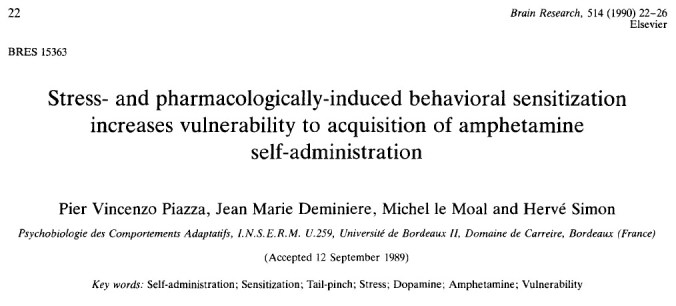
Piazza 1990. Title

Paper #1

Both of the papers we’ll go over today look at what effect stress has on the behaviors of rats exposed to psychostimulants, either amphetamine or cocaine.

As I described in The Scientist’s Toolbox, psychostimulants cause an animal to move around more, and subsequent doses, over a period of a few days, increase that movement. Recall that this phenomenon is called locomotor sensitization.

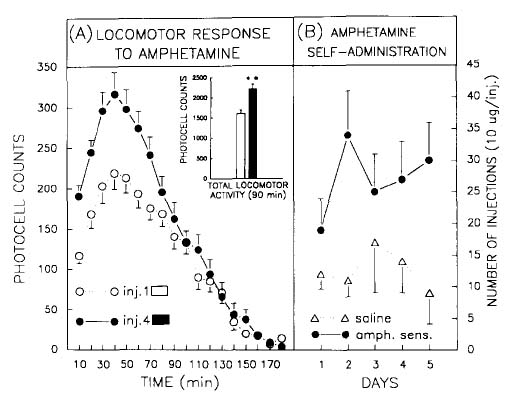
Figure 1: Behavioral sensitization to amphetamine. Locomotor activity test (left panel) and self-administration (right panel).

Figure 1: Behavioral sensitization to amphetamine. Locomotor activity test (left panel) and self-administration (right panel).

In the first paper, rats are given 4 injections of amphetamine, one injection of amphetamine every three days and, sure enough, after the fourth injection exhibit greater locomotor activity; these rats are exhibiting locomotor sensitization to amphetamines. These results are shown in the left panel of Figure 1: black circles (4th dose of amphetamine) vs white circles (1st dose). Similarly, rats were given the same regimen of injections and 24hrs after the fourth injection self-administration of amphetamine was tested. As show in the right panel of Figure 1, only animals that were previously exposed to amphetamine (black circles) compared to saline-exposed rats (white triangles) self-administered amphetamine (nose-poked in order to receive drug infusions).

For the next experiment, there are two groups of rats: one group is exposed to stress and other is not. The type of stressor used in these experiments is called tail-pinch and it is exactly what it sounds like: a device is set to deliver a quick squeeze to the rat’s tail. This causes just a mild amount of pain and is very unexpected to the animals, thus it “stresses them out”. This means, as shown in other studies, that tail-pinch activates the HPA axis (increased cortisol secretion). In this experiment, no apparatus is used so instead the rats are placed in a bowl one at a time and then the scientist pinches the tail using forceps (tweezers).

Figure 2: Impact of stress on the behavioral effects of amphetamine. Locomotor activity (left panel) and self-administration (right panel).

Figure 2: Impact of stress on the behavioral effects of amphetamine. Locomotor activity (left panel) and self-administration (right panel).

Each animal in the stress group is exposed to 1min of tail pinch, 4times/day for 15days. This represents a chronic stress. The non-stress group rats are also placed in the bowl but no tail-pinch is applied. This is important to make sure that simply being handled or being put in the bowl is not having an effect. This non-stress group is an essential part of the experiment because it allows us to compare the effects of the stress test to animals that did not receive the test. It is called a control group. Controls are necessary for every experiment so that the scientist can make a useful comparison and allows him/her to interpret the experimental results.

Back to the experiment: 24hrs after the last tail pinch, both groups of animals are give an injection of amphetamine and their locomotor activity is measured. As you can see in the left panel of Figure 2, amphetamine caused greater movement in the animals that were stressed (black triangles) compared to the non-stressed control group (white triangles). This means, the ability of amphetamine to affect the animal’s movement was enhanced by stress.

In the second part of this experiment, the same stress exposure procedure is done but then the animals undergo a self-administration experiment (if you’re interested in the details, the catheter surgeries are completed before the stress exposure is started). As shown in the right panel of Figure 2, the stress group (black triangles) successfully acquired self-administration, meaning they gradually self-administered more and more amphetamine every day of the experiment. This behavior is similar to how human addiction begins, escalation in the amount of drug taken each time. Interestingly, the non-stress control group (white triangles) self-administered amphetamine for the first two days but gradually stopped and didn’t really seem interested in receiving the drug by day 5.

Figure 3: Comparison of prior exposure to drug (sensitization) to stress: impact on the behavioral effects of amphetamine. Locomotor activity (left panel) and self-administration (right panel).

Figure 3: Comparison of prior exposure to drug (sensitization) to stress: impact on the behavioral effects of amphetamine. Locomotor activity (left panel) and self-administration (right panel).

In Figure 3 the authors of this study compared the effect of prior exposure (sensitization) to stress for both the locomotor and self-administration experiments. They did this by dividing the experimental data by the control data (this is called normalization). There appears to be no difference between prior exposure and stress on locomotor activity and self-administration.

The authors conclude that stress is as potent as prior exposure to enhance the properties of the drug; stress exposure may be a significant factor why some people become addicted while others do not.

So very cool, it looks like stress can cause rats to want to self-administer more amphetamine and enhance the physical effects of the drug. Many other studies have found similar effects of stress. Let’s take a look at one paper that uses a different stress and a different drug.

Paper #2

Paper #2

Paper #2

In this study, the drug studied is the psychostimulant cocaine and the stressor is social stress. There are many variations of the procedure used for social stress but many are similar. In this paper, the rat to be stressed (the intruder) is placed in the home cage of a different rat (the aggressor). Because rats are territorial, this provokes the aggressor to attack the intruder. The intruder is left in the aggressor’s cage until it is bitten 10 times by the aggressor. The intruder rat is then placed in a mesh cage and put back in the home cage of the aggressor for a period of time. This way the intruder can still see and smell its attacker but can’t be physically attacked. This is repeated for several days. Social stress has been shown to be a very potent stressor, probably more so than tail pinch.

Note: The other study looked only at males but this study is interested in both males and females but for what we are interested in, this is a minor detail.
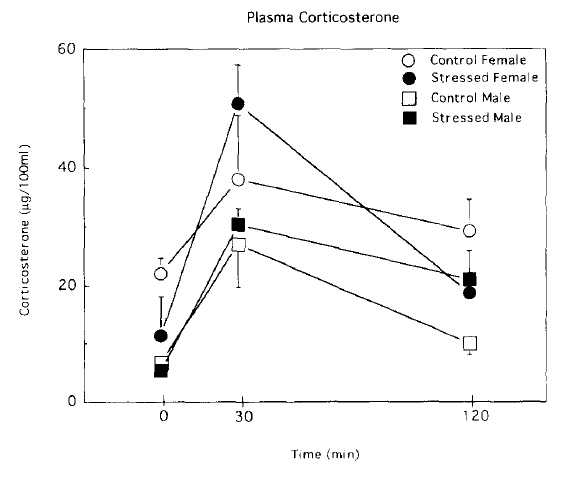
Haney 1995. Fig 1

Figure 1: Corticosterone levels in a novel environment in stresses and un-stressed male and female rats

First, activity of the HPA axis is measured by looking at corticosterone levels (this it the rodent equivalent of cortisol) when exposed to a novel environment (a novel environment is itself a type of mild stress). As you can see in Figure 1, rats that were previously exposed to social stress (black symbols) released higher amounts of coricosterone when placed in the novel environment compared to their unstressed counterparts (white symbols). This means the social stress has resulted in activation of the rat’s stress response, the HPA axis. Interestingly, female rats seemed to have a greater stress response overall.

Figure 2: The effect of social stress on cocaine self-administration.

Figure 2: The effect of social stress on cocaine self-administration.

Next, the effect of social stress on self-administration of cocaine is tested. As we saw with tail pinch stress and amphetamine, social stress caused an enhanced acquisition of cocaine self-administration whereas unstressed animals did not acquire cocaine self-administration. These data are presented in Figure 2, stressed rats (black symbols) and unstressed rats (white symbols).

In this paper, the authors also conclude that social stress—and activation of the HPA axis—makes it easier for a rat to acquire to cocaine self-administration; stress makes the rat want to self-administer cocaine.

 To summarize: these studies have found that two different types of stress have a similar effect on two different kinds of drugs. The first study found that tail-pinch stress increases the amount of locomotor activity induced by amphetamine. This stress also increases the amount of drug that the animals will self-administer. The second paper found that a different kind of stress, social stress, caused an activation of the HPA axis and had the same effect on cocaine self-administration: animals exposed to stress acquired self-administration behavior.

Based on the self-administration data, we conclude that stress caused the drugs to have a greater reinforcing effect. This is measure of the amount of pleasure the animals get from the drug. Therefore, we interpret that the stress made the drugs more pleasurable to the animals because they wanted to self-administer more drug.

However, there are some caveats that need to be briefly discussed. Both of these studies only looked at short term self-administration experiments (5 days) and both used relatively low doses. Many studies have found the rats and mice will self-administer cocaine and amphetamine regardless of whether they were exposed to stress or not. Nevertheless, these two papers are examples of how exposure to stress can cause a drug to be more addictive (technically, more reinforcing).

Next, we’ll look at some more stress studies that try to identify the molecular mechanisms—what stress is actually doing to the brain—of stress and addiction.

If you made it this far, thanks so much for sticking with it!

Just as a last thought: both of these are old papers, from the 90s and both are not very extensive (compared to today). This may sound incredible but it’s just an example of how difficult and time consuming science really is!

Thanks for reading  🙂

The Scientist’s Toolbox: Techniques in Addiction Research, Part 1

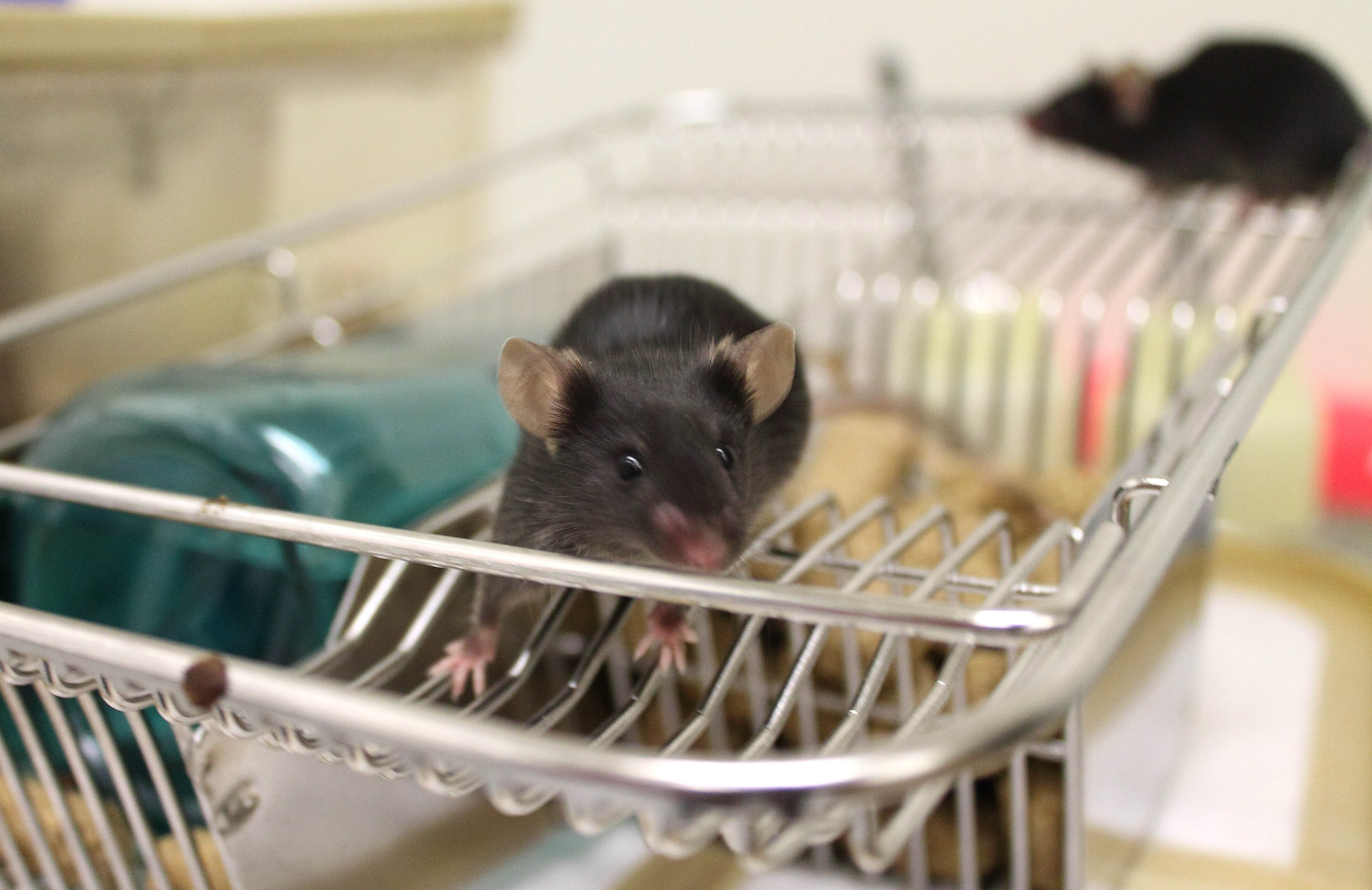
Lab Mice IMG_4102

(Image © Derek Simon 2015)

One of the most important questions that every scientist learns to ask is “How do you know that…?” As scientists, we are trained to be skeptical. When we consider a bit of research done by a colleague, before we are inclined to believe the data,  we need to be sure that they conducted the right experiments and that those experiments were done correctly. This doesn’t mean that scientists are stubborn or closed-minded. The reality is quite the opposite. Scientists are ready to incorporate new ideas and new results but first we need to know that the data are real. That’s what being a skeptic is all about: reserving judgment until you know all the facts.

The question “How do you know that..?” is one of the intellectual tools we use when considering whether or not data are real or not. This question has two parts: 1) how do you measure the thing that you interested in and 2) how do you know the effect you are seeing is actually based on what you think it is? What type of comparisons do you need to make in order to test the effect you’re interested in?

The first point of the question relies on special tools, equipment/technology, and experimental setups that are used to take measurements. For example, if you want to know how much a mouse likes taking a drug, then you need a way to measure how much drug it takes and how often it takes the drug (more on this in a bit). Today, I’ll go over a few of the tools that we use in addiction research.

The second part is more important (and more difficult to explain) but is really at the heart of the scientific method. It is all about experimental design and making sure you make the proper comparisons and analyses. I won’t discuss these details any more right now but will save this discussion for a future post.

Instead, let’s take a look at a few of the tools a scientist studying drug addiction has in his/her toolbox.

Locomotor Activity Test

The psychostimulants amphetamine and cocaine act in very similar ways and have very similar effects on the brain. We know that stimulants sort of “amp you up” or make you feel like you have more energy. Think of how you feel after drinking too much coffee. And what do you do when you have more energy? You tend to move around more (maybe you feel a little twitchy/antsy after too much of that coffee…). The same thing happens to mice and rats.

Locomotor Activity Test Chamber with a mouse. Image from UC-Davis Mind Institute (http://www.ucdmc.ucdavis.edu/mindinstitute/).

Locomotor Activity Test Chamber with a mouse. Image from UC-Davis Mind Institute (http://www.ucdmc.ucdavis.edu/mindinstitute/).

We can measure the amount of movement using a locomotor activity test. This test uses a special piece of equipment that uses light beams and a light-sensitive detector. Whenever the animal moves around the test box, the light beams are broken and the detector records that information. One way to analyze the data is by simply plotting beam-breaks (photo-cell counts are the same thing) that occur over the time of the test period. This way you have a measure of how much the animal moves around in a certain amount of time (more beam-breaks/time unit equals greater movement). A more sophisticated analysis of this same data can actually give you information on where in the box the animal spends its time. Does is just pace back and forth in a small area of the box or does it explore the entire chamber? This type of exploratory behavior data is valuable information and can be useful to other fields that may or may not study drug addiction. The general test for this exploratory behavioral analysis, regardless of speed of the movement caused by drugs, is the open field test.


Multiple test boxes with a computer that collects the data. Image from Douglas Mental Health Institute (http://www.douglas.qc.ca/page/neurophenotyping-motor-function).

Multiple test boxes with a computer that collects the data. Image from Douglas Mental Health Institute (http://www.douglas.qc.ca/page/neurophenotyping-motor-function).

An interesting phenomenon has been identified with psychostimulants. If you give an animal an injection of cocaine it will move around more compared to regular animals. But if you give it another dose of cocaine the next day it will move around even more than it did on the first day. This is called locomotor sensitization and is an important property of psychostimulants like amphetamine and cocaine.

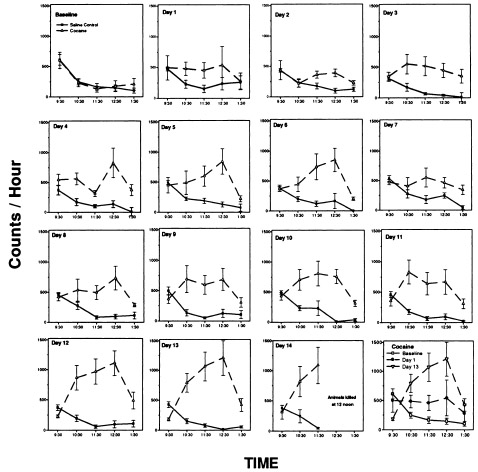
The graphs below are real data that I took from a figure from one of our lab’s papers so you can see what locomotor sensitization looks like.

Cocaine-induced locomotor sensitization. Unterwald EM et al. J. Pharmacol. Expt. Ther. 1994.

Cocaine-induced locomotor sensitization. (Unterwald EM et al. J. Pharmacol. Expt. Ther. 1994.)

It’s a little hard to read but there are two groups of animals: one that receives cocaine injections (the top line) and the other that receives saline injections (the bottom line). Saline is a saltwater solution that is a standard control solution that has no biological effects. Each data point represents an average of several animals from each group. The baseline graph shows the locomotor activity before injections (no differences). As you can see, at day 1 the cocaine animals are already moving more than the saline group. This increase in movement continues over the 14 days of the experiment, evidence of locomotor sensitization.

This video shows an analysis of locomotor activity using video tracking software instead of light-beam breaks.

Self-Administration

Locomotor activity is all good and well but not all drugs of abuse cause locomotor sensitization. More directly related to addiction in humans, how do we even know if the animal likes the drug or wants to take the drug? Humans addicts crave the drug and compulsively use it, meaning the desire to do the of the drug overpowers the addict’s self-control. Is there a way we can study this type of drug-taking behavior in animals? The answer is yes!

Self-administration is a very versatile and powerful technique used throughout the addiction field. This technique allows the animal to control whenever it takes the drug and however much it wants. We can study many different aspect of drug taking using self-administration.

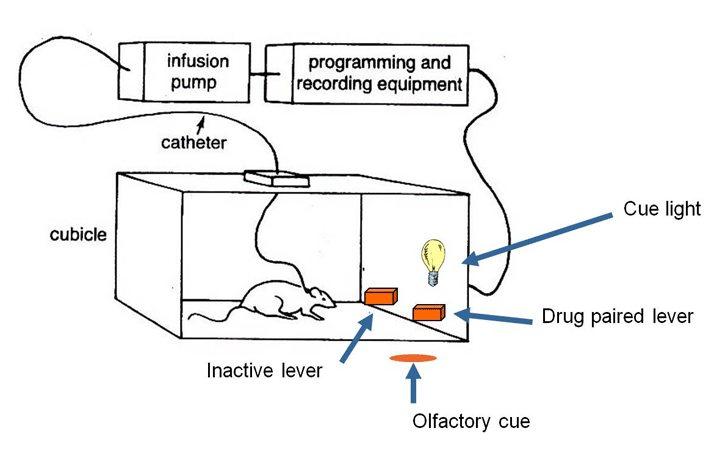
A diagram for a typical self-administration chamber. Image from Med Associates (http://www.med-associates.com/).

A diagram for a typical self-administration chamber. Image from Med Associates (http://www.med-associates.com/).


The basic idea is is simple: The rodent (mouse or rat) is placed in a chamber and presented with two levers. If the mouse the presses one lever (the active lever) it receives a dose of drug but if it presses the other lever (inactive lever) it does not. The self-administration sessions are run for a set period of time and the number of presses is recorded for each lever. Over the course of several days the animal steadily increases the amount of lever presses, thus the amount of drug it takes. Meaning the animal learns how to take drug and then takes more and more of it. Just like a human addict would do!

Alternatively, the mouse can poke its nose at a special hole that acts just like the active lever. I’ll use “lever press” and “nose poke” interchangeably because they essentially mean the same thing.

Here’s a little cartoon I found on YouTube of a rat that is self-administering nicotine.


Here’s another video that shows a real mouse self-administering a natural reward (meaning not a drug of abuse but food in this case).


There are several important variations to this basic idea that help scientists to not only make the experiments easier to control and data better/easier to analyze, but allow different aspects of drug taking to be studied.

For example if you are studying alcohol addiction, then when the mouse presses the lever a spout may appear that allows the animal to drink the alcohol (the inactive lever produces a bottle of water only). This is perfect for testing alcohol self-administration because both humans and mice drink alcohol. But what if you want to study heroin or cocaine self-administration? Humans (nor mice) drink or eat these drugs. So how does the drug get delivered to the mouse when it presses the lever?

The answer is intravenous self-administration. In this version, a small surgery is performed where a small tube (a cathether) is threaded into the jugular vein of the animal. This tube is fixed to the mouse back and attached to another tube that is part of the self-administration apparatus. This time when the mouse hits the lever, a dose of drug is pumped directly into its vein! See the diagram and videos above for more details.

Intravenous self-administration has several advantages.

  • As explained above, it allows us to deliver drugs to animals that won’t take them orally.
  • It allows the drug to act immediately on the animal because the drug is being delivered directly into the bloodstream.
  • It allows us to control the dose of the drug. When the mouse hits the lever (or nose pokes) it receives a fixed amount of drug that the scientist decides on ahead of time. That way we know how much total drug the mouse takes during a single self-administration session.
  • There is no variability in whether the animal is receiving the full dose or not. For example, if the lever press results in a food pellet, there is no guarantee the animal will eat the whole thing. But if you set the self-administration apparatus to deliver 0.5mg of heroin every time the lever is pressed, then there is no doubt if the full 0.5mg dose is delivered to mouse ever time.

Warning: not for the squeamish! This video shows you how to do the catheter implantation surgery on a mouse that will be used for intravenous self-administration!

Finally, best of all, self-ad can be used to address many different types of questions related to different stages in the addiction cycle. Here I briefly describe some of the more common experimental questions and applications that self-ad can help to address.

  • Initial use and escalation of use. How much will the animal take when it is first exposed to the drug? Will the animal reach a ceiling in the amount of drug it will take in a single session?
  • Maintenance of drug taking. One cool variation is you can make it more difficult for the animal to get the same dose of drug. This is called a progressive ratio self-administration. For example, the animal may need to press the lever 5 times before it receives a dose. You can keep increasing the number of presses during each session to see how hard the animal will work for a dose. One way this experiment can be interpreted is how badly does the animal want the drug? Some animals will press the lever many, many times just to get a small dose. This type of behavior is similar to the intense cravings that human addicts can experience.
  • Extinction and Relapse. You can run a special type of experiment where you run a self-administration experiment like normal and then change it so that the active lever no longer gives the animal a dose of drug. Eventually, the animal presses the lever less and less as it learns that it will no longer get the drug. This is called extinction of self-administration. This is like being in a rehab clinic where you are prevented from taking the drug. However, after the extinction sessions, if the scientist gives the animal another does of drug this will causes animal to start pressing the lever at high rates again. This a called reinstatement of self-administration and is model of relapse. What other types of conditions or factors can cause reinstatement (relapse behavior)? This situation is just like an abstinent cocaine addict who may not be craving cocaine but if he/she takes even a single hit, this can be sufficient for that person to sink back into full-blown addiction.

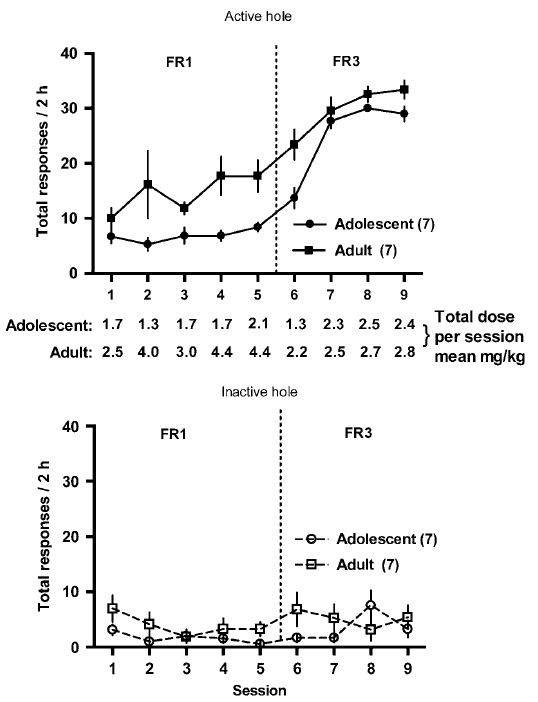
Let’s take a look at some real data. The graph below is from a paper from our group that looks at oxycodone self-administration in mice.

Oxycodone self-administration by adult and adolescent mice. (Zhang Y et al. Neuropsychopharmacol. 2009.)

Oxycodone self-administration by adult and adolescent mice. (Zhang Y et al. Neuropsychopharmacol. 2009.)


This study is interested in comparing oxycodone self-administration between adult mice and adolescent mice. As you can see, the number of nose pokes at the active hole (remember, same thing as a lever presses) increases during the course of the experiment (don’t worry about FR1 vs FR3) while the inactive hole is ignored, because it does not result in drug administration. Note that the nose pokes are plotted over the time of the administration sessions (2 hours) and that 9 sessions are run (one every day).

Microdialysis

The types of experiments I’ve described so far are great ways of studies addictive behaviors but they don’t really tell you about what’s going on in the brain. These behavior experiments are useful in themselves but they are much more powerful if they can be combined with another type of experiment that gives you a window into what’s changing in the brain at the same time as the behaviors.

In my post Synapse to it, I described how neurotransmitters are released by the pre-synaptic neurons into the synaptic cleft so that they can act on receptors located on the post-synaptic neuron. Using microdialysis, you can sample the fluid that exists in the synaptic cleft and actually measure the amount of neurotransmitters being released!

This is an extremely difficult and very technically complicated technique and I will only go into the basics about it. First, the microdialysis probe is surgically placed into a region of the brain that you are interested in studying.

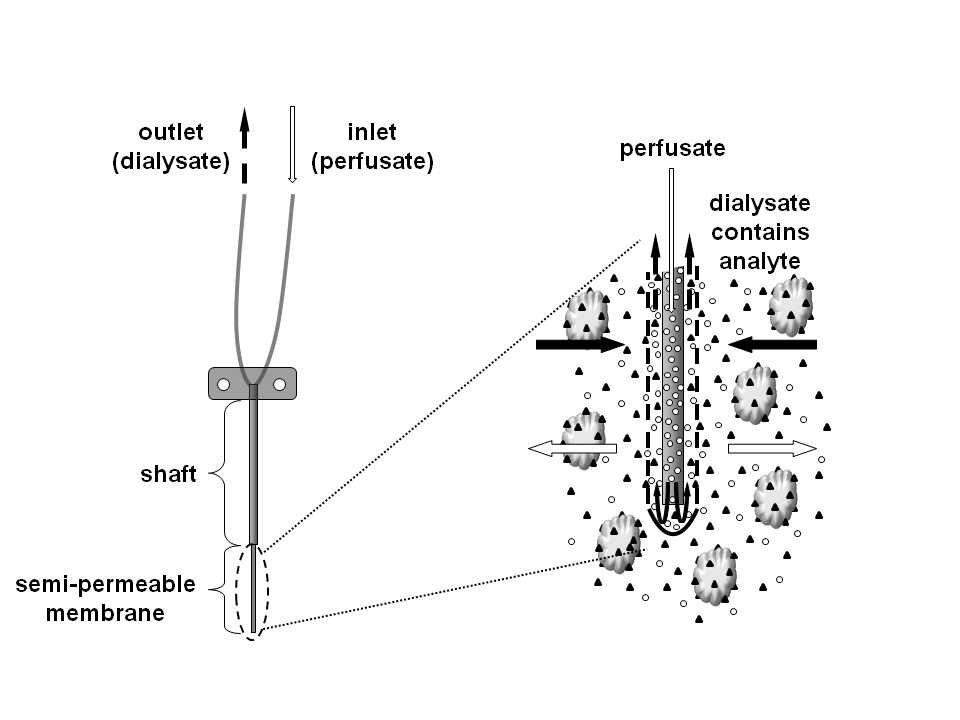
The microdialysis probe itself is like a very thin piece of tubing that allows the experimenter to flow fluid into it one side(inlet) and collect the fluid that flows out of the other side (outlet). At the tip of the probe (the part that’s actually inside the brain) is a special type of material that allows fluid from inside the brain to flow into the tubing (a semi-permeable membrane).

Schematic of a microdialysis probe. Image from Wikipedia.

Schematic of a microdialysis probe. Image from Wikipedia.

After the surgery, you run your behavioral experiment, and while you are doing that you start flowing fluid into the brain. The fluid that the microdialysis probe flows in is of a similar consistency to the fluid that exists naturally in the brain. As the fluid inside the probe moves through the tubing, it causes fluids in the brain to enter into the probe and through the tubing where it can be collected when it flows out of the tubing.

Let’s say you give an animal a drug that causes a neurotransmitter to be released in the brain region you are interested in. Then some of those released neurotransmitters will enter the microdialysis probe because some of the fluid that enters the probe is from the synaptic cleft.

You keep collecting fluid at different time points during your experiment. When the experiment is over, then you can use chemistry to determine what neurotransmitters are in the fluid you collected. Best of all, you can determine how much of those neurotransmitters you have! How you do actually use chemistry to do this is a very technical part of the procedure and is not important to this discussion.

And all that work gives you a nice graph of the neurotransmitters that are released at different times during your experiment.

Now for some real data. Below are figures from a paper that our lab produced that uses microdialysis to study release of the neurotransmitter dopamine.

Evidence of probe placement in the Caudate  Putamen. (Zhang Y et al. Brain Res. 2001.)

Evidence of probe placement in the caudate putamen. (Zhang Y et al. Brain Res. 2001.)


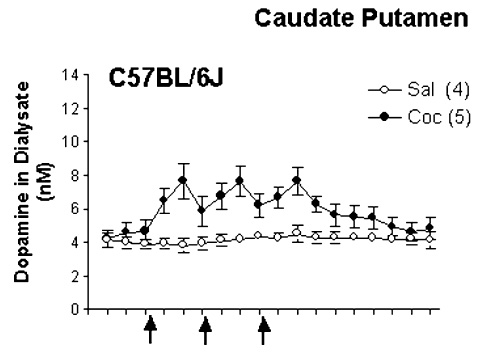
Cocaine-induced increase in DA. (Zhang Y et al. Brain Res. 2001.)

Cocaine-induced increase in DA. (Zhang Y et al. Brain Res. 2001.)


In this study, the effect of cocaine on dopamine release in a region of the brain called the caudate putamen is being studied. The first image shows you that the microdialysis probe was placed in the right area of the brain (the white line that pierces through the dark area is the tract in the caudate putamen). The graph shows that injection of cocaine (the arrows) causes an increase in dopamine release in this brain region. Interestingly, the dopamine levels have returned to normal by the end of the experiment. Note: C57Bl/6J is the strain of mouse used in this study.

These are just three of the techniques that are used in addiction research. But we scientists have very big toolboxes! I’ll to explain some more in a later post.

Feel free to contact me or comment if you have questions!

Thanks for reading 🙂
Go back

Your message has been sent

Warning
Warning
Warning
Warning

Warning.

New Review Paper-The Prescription Opioid and Heroin Epidemic

(Image by Mark Weiss/Corbis)

(Image by Mark Weiss/Corbis)

A new paper published online in January 2015 by Kolodny et al. provides an overview of the epidemic of addiction to opioid prescription medications and heroin which is sweeping through the United States. Numerous news outlets from the Huffington Post to the New York Times have been covering this disturbing trend. This important review paper is being released at a critical time.

Kolodny et al TitleYou can find the complete article here.

The authors do an excellent job of outlining the epidemic from a public health perspective. I just wanted to summarize some of the paper’s main points and findings:

  • Abuse of prescription opioid pain relievers (OPR) and heroin is reaching epidemic levels
    • From 1999-2011, oxycodone (a common OPR) use has increased by 500%
    • From 1997-2011, there has been a 900% increase in individuals seeking treatment to for opioid addiction
    • From 2004-2011, there has been a doubling in ER visits due to non-medical use of OPR
    • The author’s highlight that there is a disturbing correlation between the rise in opioid sales, opioid overdose deaths, and opioid addiction (See the figure below)
(Figure 1 from Kolodny et al. 2015)

(Figure 1 from Kolodny et al. 2015)

  • The authors contend that the cause of our current epidemic is rooted in:
    • The development of new opioid medications such as OxyContin (an extended release form of oxycodone introduced in 1995)
    • The over-prescription of OPR coupled with a shift in medical attitudes towards the treatment of chronic pain
    • A series of studies suggesting that long-term opioid use does not result in addiction. We now know this to be false.
      • According to a recent study, 25% of chronic pain patients treated with OPR fit criteria for opioid addiction and 35% for opioid abuse disorder
  • The public health issues related to non-medical use of OPR are significant
    • Heroin use has drastically increased over the same period as OPR abuse
    • 4 out of 5 current heroin users report that their addiction began with abuse of OPR (See here for more information).
    • Overdose deaths and hospitalizations as a result of OPR have been strikingly high since 2002. See the graphs below.
(Figure 4 from Kolodny et al. 2015)

(Figure 4 from Kolodny et al. 2015)

  • Using an epidemiologic approach, the authors outline a prevention strategy for opioid addiction broken down into primary, secondary, and tertiary interventions.
    • Primary prevention
      • Reduce the incidence of the disease condition: opioid addiction (ie prevent new addiction cases)
      • Education of prescribers regarding OPR use
        • The risks of chronic OPR use, such as addiction and respiratory depression (difficulty breathing), are high
        • Little data exists for the effectiveness of long-term OPR use in helping chronic pain patients
      • Substitution of OPR for non-opioid pain relievers must be strongly encouraged
      • Prevention of OPR use amongst adolescents
        • Caution in OPR prescribing
          • Most youths that experiment with them get OPR from family or friends who have an OPR prescription
        • Change the perception that OPR use is less risky than heroin use
          • In reality the risk of addiction to OPR is as high as it is for heroin
    • Secondary Prevention
      • Identify and treat opioid addicts early in their disease
        • Identify users of OPR that are detected by prior to more significant health problems or transition to heroin use
        • Difficulty in diagnosing opioid addiction
          • Urine toxicology screens in some cases
          • Use of prescription drug monitoring programs (PDMPs) to identify patients who seek prescriptions from multiple doctors
    • Tertiary prevention
      • Treatment and rehabilitation of opioid addiction
        • The National Survey on Drug Use and Health (NSDUH) estimates 2.1 million Americans are addicted to OPR and 467,000 to heroin.
        • Combination of pharmacologic and psychosocial treatments
          • Psychosocial therapies (residential treatment centers, mutual-help programs, 12-step programs) can be effective for some patients but should be use in combination with pharmacologic treaments
        • Pharmacologic treatments such as methadone and buprenorphine (Suboxone) are safe and highly effective
          • They work by effectively blocking cravings without causing the “high” the OPR and heroin cause
          • However, fewer than 1 million addicts are receiving these treatments
          • Significant federal limitations exist to buprenorphine prescription
            • See my Post on this topic, which links to an important Huffington Post article on the topic
        • Harm-reduction approaches
          • Needle-exchange programs to reduce HIV transmission
          • Naloxone for treatment of overdose deaths
    • Conclusions
      • Prescription opioid and heroin addiction are reaching epidemic levels in the United States
      • A coordinated public health effort of federal and state agencies, health care providers and insurers, treatment/recovery initiatives and the research community is required to deal with this crisis.

For more statistical information, consult the National Survey on Drug Use and Health.

Also, see the data section of the Substance Abuse and Mental Health Services (SAMSHA) for statistics related to non-medical use of OPR and heroin.

New Study-Deep Brain Stimulation Reverses Cocaine-induced Changes in the Brain

An interesting new study published in Science used deep brain stimulation (DBS), a technique approved for treatment of some psychiatric disorders but with an unknown therapeutic mechanism, to reverse cocaine-induced changes of the reward circuitry in the mouse brain. Using a combination of optogenetics, electrophysiology, and pharmacology, the authors were able to improve DBS in order to eliminate the behavioral sensitization to cocaine in mice. A well known  neurobiological change induced by by cocaine is a strengthening of excitatory neuronal inputs into the Nucleus Accumbens, a brain region at the core of the reward pathway. The authors showed that the DBS was able to reverse the cocaine-induced changes in the neural circuitry of the Nucleus Accumbens and this is the most likely mechanism for the effectiveness of DBS in reversing the behavioral changes caused by cocaine. The study suggests that DBS may represent a potential therapy for reversing addiction to cocaine.

You can find the link to the full paper here.

Apologies for not being able to share the pdf but I requested permission and will hopefully be able to upload it soon!


Synapse to it

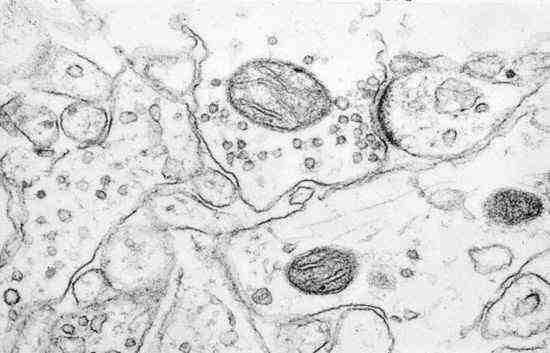
Synaptic Ultrastructure-Electron miscroscropy . Palade, de Robertis, and Bennett. 1954

Synaptic ultrastructure-electron microscopy image . Palade, de Robertis, and Bennett. 1954

Using the technique of electron microscopy, this is one of the first images ever taken that proved that the neurons do not physically touch. The space between the junctions of neurons is called the synapse and the work of Palade, de Robertis, and Bennett definitively proved this, thus validating the initial idea by Ramon Y Cajal (proposed in the early 1900s in his “Neuron Doctrine”).

Now, to pick up where we last left off….

A quick note: I’ve decided to try to keep my basic neuroscience posts as brief as possible and try to keep the details to a minimum. Let’s see how that goes…

Also, if you see this symbol Needle Drug Pic 2 it means that I am relating the content to drug addiction.

In my post I am Neuron!, I used the analogy that neurons are able to listen to and talk with other neurons. The specialized junction where one neuron is able to talk to another neuron is the synapse. The neuron that “listens” is the post-synaptic neuron while the neuron that “talks” is the pre-synaptic neuron. The axon terminal of the pre-synaptic neuron synapses on the dendrite of the post-synaptic neuron.

But the pre and post-synaptic neurons don’t physically touch. There’s actually a little bit of space between them called the synaptic cleft. (See the diagram below for more details)

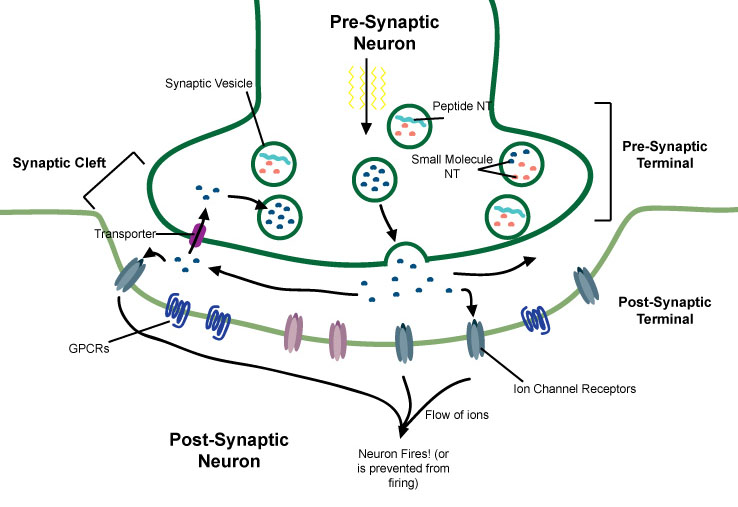
The Synapse.

The Synapse. In this example, neurotransmitters (blue dots) are packaged into synaptic vesicles. When a current reaches the axon terminal, the vesicles fuse with the membrane, allowing the NT to be released into the synaptic cleft, where they diffuse through the cleft until binding to the appropriate receptor. In this example, the NT binds to an ion channel receptor, which allows ions to flow into the post-synaptic neuron which may result in the neuron firing (or not firing). NT are then cleared from the cleft, in this example, by being brought back into the pre-synaptic neuron via a transporter.

Note: in some cases neurons talk to other cell types. For example, a neuron can synapse on a muscle fiber and when the neuron fires it causes the muscle to contract.

How do the neurons communicate across the empty space in the synaptic cleft? What are the “words” that neurons say to each other? And what happens to the “listening” neuron once it hears those words?

The “words” are special chemical signals called neurotransmitters. And neurotransmitters tell the neuron whether it should fire or not fire.

Needle Drug Pic 2 One of the keys to understanding how drugs of abuse work is by understanding what neurotransmitters are and how they affect neurons. Drugs of abuse either 1) affect whether a neuron releases a particular neurotransmitter, 2) change how long neurotransmitters acts once they are released or 3) resemble neurotransmitters that the brain normally produces and are able to trick the brain into responding to them in similar ways.

But what are the neurotransmitters the brain normally makes? And what do they do?

Neurotransmitters (NT) are molecules that are made, stored, released, and eliminated by neurons. The total number of neurotransmitters that the brain naturally makes is not known but so far over 100 have been identified. This diverse group of NT can be roughly broken into two groups 1) small molecules and 2) peptides.

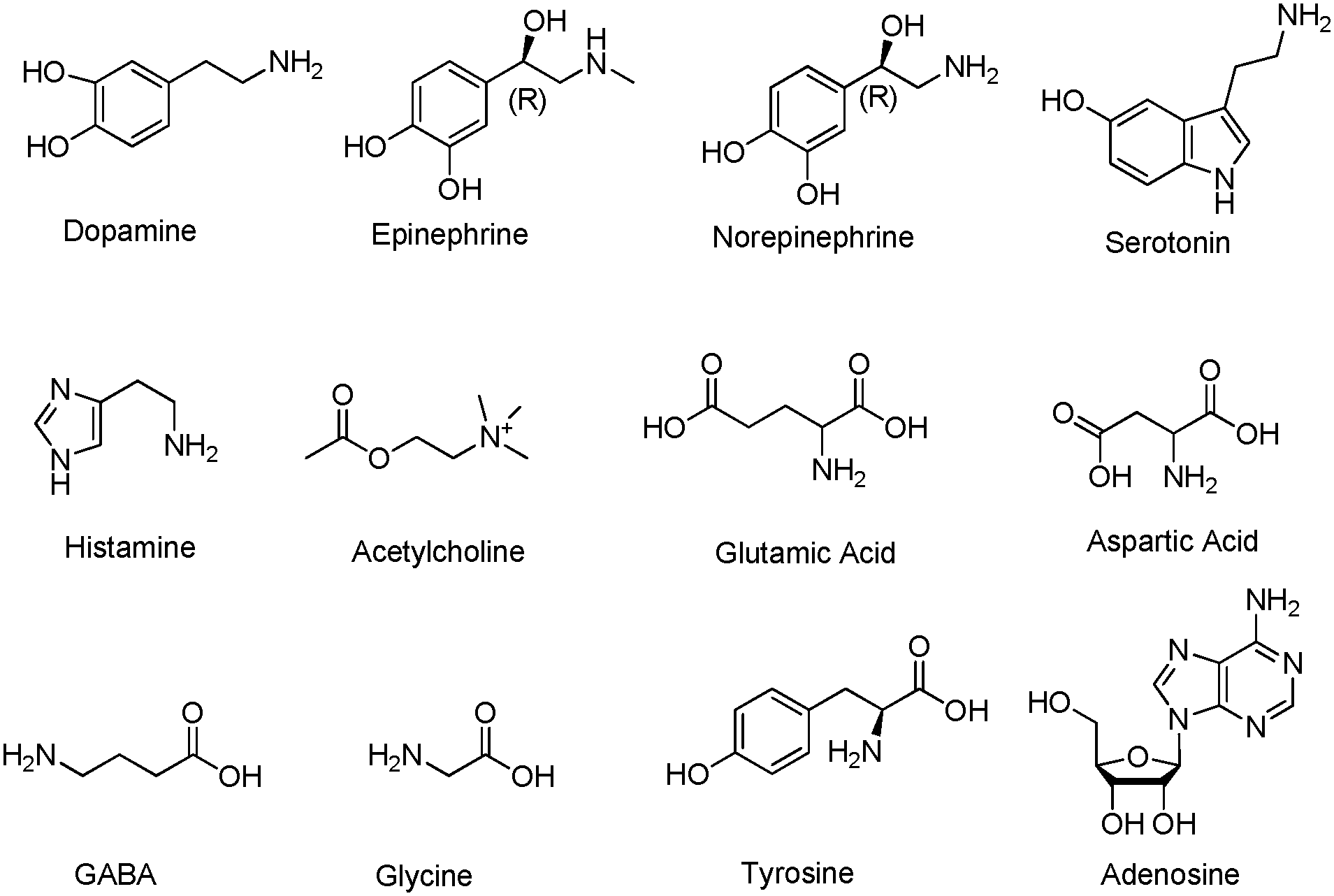
Some of the common Small Molecule Neurotransmitters.

Some of the common Small Molecule Neurotransmitters.

Small molecule NT  contain only 20 or so atoms and often resemble amino acids (the buildingblocks of proteins). These include ones you may have heard of like serotonin, glutamate, acetylcholine, GABA, epinephrine (adrenaline), norepinephrine (noradrenaline) or the one we in the addiction field care a lot about: dopamine.


The peptide NT are small protein molecules. Proteins are large macromolecule made of amino acids and carry out many of the functions of a cell. Proteins can contain hundreds of amino acids but peptides generally only have a dozen or so. Still, the peptide NT are much larger than the small molecule NT. Some of these include oxytocin, vasopressin, neuropeptide Y or the endogenous opioid peptides: enkephalin, dynorphin, and the endorphins. We’ll spend some time talking about the opioids in later posts.

An example of a Peptide Neurotransmitter: Beta-Endorphin. Note that it is much larger than any of the small molecule NT.

An example of a Peptide Neurotransmitter: Beta-Endorphin. Note that it is much larger than any of the small molecule NT.


NT are packaged in small packets called synaptic vesicles. When an electrical current makes it way down to the axon terminal, this causes synaptic vesicles to move to the cell membrane of the pre-synaptic terminal, fuse with that membrane, and release its NT into the synaptic cleft.

Once released, the NT diffuse through the synaptic cleft. They then act on the post-synaptic neuron by sticking to or binding with special types of protein molecules present at the cell membrane called receptors. Each NT has its own special type of receptor that it binds to and activates. However, NT have been found to activate several types of related receptors.

Needle Drug Pic 2For example, dopamine can bind to either Type 1 Dopamine Receptors (D1R) or Type 2 Dopamine Receptors (D2R).

Just like the neurotransmitters themselves, there are many different receptors but they can be generally categorized into two types: ion channels and G-protein coupled receptors (GPCRs).

Two Types of Neurotransmitter Receptors.

Two Types of Neurotransmitter Receptors. Left: the NT binds to the GPCR which results in a signal being sent into the neuron. Right: the NT binds to the ion channel receptor which opens the channel and allows ions (charged atoms, in this example, positively charged atoms) to enter the cell.


When a neurotransmitter binds to a receptor that is an ion channel, it opens this channel and allow the entry of a specific type of charged atom, called ions, to enter the post-synaptic neuron. Each ion channel is specific to a particular type of ion. Some examples of ion channels that exist are the NMDA receptor and the AMPA receptor. Some examples of ions important to neuroscience are potassium ions (K+), sodium ions (Na+) and chloride ions (Cl-).

When an ion channel opens and ions flow into the post-synaptic neuron, if enough of them enter, they can cause that neuron to generate a strong electric current and fire. After all, an electric current is nothing more than the flow of ions. However, the is a very complicated process so I’ll mention nothing more on the subject right now. But if you’re curious, the type of current that is generated when a neuron actually fires is called an action potential.

The other types of NT receptors are GPCRs and they don’t directly cause ions to flow into the neuron but change other properties that may help the neuron to fire more easily (or make it more difficult for a neuron to fire).

Needle Drug Pic 2An important group of GPCRs that are relevant to drug addiction are the opioid receptors. For example, morphine activates the mu opioid receptor (MOPR). We’ll discuss this more later.

Lastly, I just need to briefly mention that once a neuron fires and NT are released into the synaptic cleft, they need to be removed as quickly as possible. The two ways of doing this is by physically changing the NT into a different chemical and this is done by special proteins called enzymes.

The second way that NT are removed from the synaptic cleft is by bringing them back into the pre-synaptic neuron. This is accomplished by another type of protein called a transporter.

Needle Drug Pic 2Some drugs, like cocaine, work because they prevent transporters from working and lead to too much NT in the synaptic cleft.

In conclusion, neurotransmitters are:

  • Stored in the pre-synaptic terminal in vesicles
  • Released into the synaptic cleft
  • Come in two varieties: small molecules and peptides
  • Bind to specific receptors on the post-synaptic terminal
    • NT binding to an ion channel receptors can directly cause the post-synaptic neuron to fire
    • NT binding to GPCRs alter other properties of the neuron
  • Are cleared from the synaptic cleft by either enzymes or transporters

I think now we have good foundation in some very basic concepts in neuroscience.

My next original post will now look more specifically at how drugs actually affect neurotransmitter release from neurons and why this is important.

Huff Post Piece on Treatment of Opioid Addiction

A very well written article. Emphasizes that addiction is a medical disease that requires evidence-based (scientifically researched and proven) treatments. In fact, the piece includes quotes from the head of my lab, Dr. Mary Jeanne Kreek of the Rockefeller University.

http://projects.huffingtonpost.com/dying-to-be-free-heroin-treatment


I am Neuron!

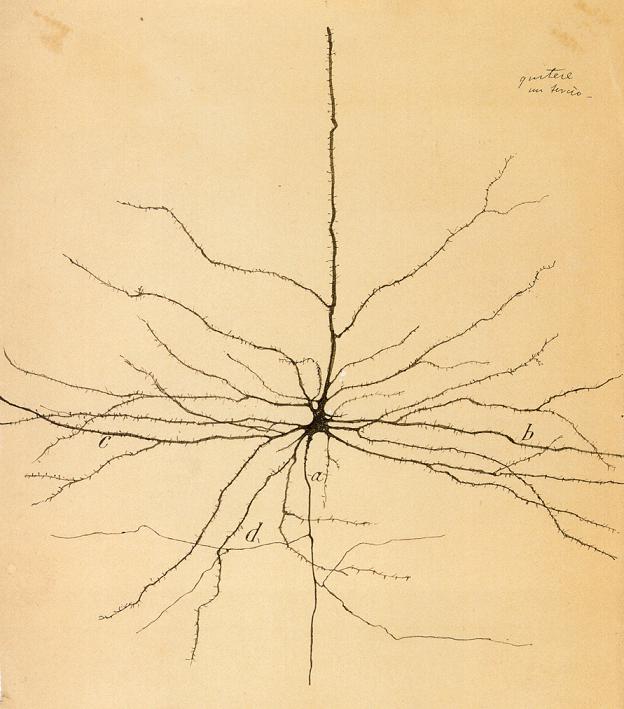
A single, pyramidal neuron. Illustration by Ramon Y Cajal S., ca. 1899.

A single, pyramidal neuron. Illustration by Ramon Y Cajal S., ca. 1899.

The image above is a hand drawing of a single neuron (specifically, a pyramidal neuron) completed by the brilliant Spanish scientist Santiago Ramon y Cajal (1852-1934): the father of modern neuroscience. He made many remarkable preparations (slides containing intact cells from brains) that he used to make countless impressive drawings of brain cells, or neurons. We have learned a wealth of information about the composition of the brain and the structures of neurons from the work of Ramon y Cajal. His images of neurons are so detailed, accurate, and just plain beautiful, they are still used in universities and labs throughout the world today.

Like discussed in the previous post, the brain is the organ that drugs act on to change the behaviors and thoughts of the drug user. Specifically, drugs act on neurons and today’s post will be an introduction to the basic biology of these elegant cells.

A Quick Note: This and future posts are intended to be modular, meaning that each post should be an independent parcel of knowledge. If you already know about (or are not particularly interested) in the topics covered in the post, skip it and read a different one. This post is largely a basic neuroscience one and many of the other posts may speak about science/neuroscience more generally but I will try to tie most posts into the general theme of drug addiction as a biological/medical disease and/or the brain vs mind theme.

As I was saying: like every other organ in the body, the brain is made up of cells. As many of you know, the cell is the basic unit of biology. This concept is also known more generally as the Cell Theory of Biology. Basically, an organ’s function is derived from its component cells. The heart beats because of the coordinated efforts of the heart cells (cardiomyocytes) that the heart is made of and the liver functions because it is made up of many types of liver cells (hepatocytes) that all have different jobs to do. And the brain works because of the efforts of brain cells.

Neurons (in green) and Glial Cells (in red) in the Cortex of the Mouse Brain. Image courtesy of Ana Milosevic, The Rockefeller University.

Neurons (in green) and Glial Cells (in red) in the Cortex of the Mouse Brain. Image courtesy of Ana Milosevic, The Rockefeller University.

There are two main types of brain cells: neurons and glial cells. Neurons are the real workhorses of the brain while glial cells are considered support cells that help maintain brain structure and “take care” of neurons. We will not discuss glial cells at all today but will focus exclusively on neurons.

The human brain literally contains billions of neurons and these billions of neurons make trillions of connections to one another. The amazing thing is that many of these neurons operate in the same basic way: they receive a signal from a different neuron, they process the signal, and then they conduct and transmit that signal to different neurons. The details about what signals, which and how many neurons are communicated to/with, and the consequences of those signals is highly specific to the individual types of neurons and neuronal populations in the brain and is extremely complicated.

But this very general function: listen-process-talk (or stay quiet in some cases) forms the basis for everything that your brain does.

The thing I find the most extraordinary about neuroscience is all your feelings, thoughts, desires, actions, and everything you know or will ever know is because of neurons communicating with one another. And drugs have the potential to drastically change this communication (more to come).

Every animal on the planet has neurons and, once again, the basic function of human neurons, and monkey neurons, and bird neurons, and even insect neurons is the same thing: receive and conduct signals (listen-process-talk). Just as a quick-and-dirty comparison, it’s estimated that the human brain contains about 100 billion neurons while the nematode worm C. elegans (a tiny worm used for study in many labs) has only 302 neurons.

So I’ve mentioned the neurons receive and transmit signals but what signals am I talking about? Electrical and chemical signals. Each neuron has the potential to fire or to not fire. When a neuron fires, it literally generates an electrical charge and moves that charge along its length (the neuron conducts an electrical signal). When the electrical activity reaches the end of the neuron, the electrical signal is then translated into a chemical signal, which is released onto another neuron. The neuron that receives the chemical signal is then able to translate it back into electricity and fire again, thus passing the electrical signal onto another neuron and so on and so forth (and in some cases, the chemical signal says “STOP” and no electricity is generated).

The above paragraph is very complicated and will be discussed in more detail in this post and the next few. But for now let’s just take a look at the structure of the neuron in more detail. Like everything in biology, the structure (how it looks or is arranged) of something tells you a great deal about its function.

Figure 1: Diagram of a Neuron.

Figure 1: Diagram of a Neuron.

Figure 1 is a simple diagram of a neuron that I made.

You will notice two main parts of the neuron: a head with many branching structures and then a long tail with more branches. This head part is called the cell body or soma. Like other cells, this is where the organelles (mitochondria, ribosomes, endoplasmic reticulum…if these don’t sound familiar, do a quick search for “cell biology”) are located and where the normal cell maintenance activities occur (same as every other cell). This is also where all the signals received by the neuron are processed. And like most plant and animal cells in nature, neurons have a nucleus, the control center of the cell and the region that contains the cell’s DNA (I may do a primer on some basic molecular biology at some point).

At the base of the cell body is a long tail-like structure and this is one of the most important features of the neuron: the axon. The axon is how the electrical signals get transmitted to other neurons. Some axons are incredibly long. For example, motor neurons (neurons that receive signals from the brain in order to tell your muscles to contract) extend the entire length of your body! Just think about that for a second and then move your finger or toe. Any lag? Probably not, the motion is almost instantaneous and that’s because the axon is really, really good at conducting electricity!

Figure 2: The Myelin Sheath. A cross section of an axon surrounded by a Schwann cell, which forms the protective myelin sheath around it.

Figure 2: The Myelin Sheath. A cross section of an axon surrounded by a Schwann cell, which forms the protective myelin sheath around it.

To help it do this, the axon is covered in a fatty substance called myelin (MY-elin). Myelin forms a tight bundle around the axons called the myelin sheath. Figure 2 is a cross section of the axon. The myelin is actually part of a special type of cell called a Schwann cell, and these cells quite literally are wrapped around axons to form the myelin sheath (Figure 1 and 2). Myelin is so important because it acts like an insulator, just like an extension chord or other electrical wires are covered in rubber or some other material. The insulating effect of myelin (just like in other wires) helps to maintain and conserve the electrical signal.

Note that there are gaps between the Schwann cells (gaps in the myelin sheath) along the length of the axon (Figure 1). These are called the nodes of Ranvier. They play an important role in conducting the electrical signal but we’ll save this discussion for later.

Finally, at the end of the axon is a series of branching structures called the axon terminal (Figure 1). This is where the electrical signal is translated into a chemical signal. That is to say, once the electrical signal reaches the axon terminal, it causes little packets of very special signaling chemicals, called neurotransmitters, to be released from the axon terminal. We’ll spend a lot of time talking about neurotransmitters (especially dopamine, the neurotransmitter that’s very important in understanding addiction).

Now let’s go back up to the cell body. You’ll note that there are many branching structures extending from the cell body. These are called dendrites. Also note that other neurons are projecting onto the dendrites. These projections are actually axon terminals from different neurons. When a neurotransmitter is released from an axon terminal, it acts on a dendrite. This junction of one neuron’s axon terminal with another neuron’s dendrite is the called the synapse.

The synapse is not a physical connection but a very tight space between neurons. This is important because it is in this empty space that the neurotransmitters are released. Understanding the function of the synapse is crucial for understanding anything in neuroscience and when we discuss neurotransmitters we’ll talk more about the synapse.

So just to return to our listen-process-talk analogy for a moment, the dendrites would be the ears, the part of the neuron that listens, or receives the signal. The cell body is where the chemical signals are processed and then this may result in the neuron firing. If it fires, the electrical signal is transmitted along the axon, which would be like the vocal chords or tongue, both of which help in the act of talking. Finally, the mouth in our analogy is the axon terminal, the part of the neuron where the “talking” comes from, and the words the mouth “says” are neurotransmitters.

Real Mouse Neurons. Diagram of important neuronal structures.

Real Mouse Neurons. Diagram of important neuronal structures. (Modification of original image  courtesy of  Kinning Poon, Rockefeller University, 2014)

Just to wrap things up, this is an image of real neurons from the mouse brain (hypothalamic neurons if you really want to know). The blue color indicates the nucleus (but don’t worry about the other colors). This image is an immunofluorescent image and it’s a nifty technique to examine detailed cellular structures (yes, I’ll explain this in detail later too. Also added to the list….). I’ve pointed out some of the structures that we talked about today.

Ok, so I guess my goal to write shorter posts is not really happening…

Hopefully you’re not feeling too overwhelmed. Over the course of the next two posts, we’ll dive into how neurotransmitters cause neurons to fire or to not fire.

Drug Addiction is a Medical Disease-a Disease of the Brain

brain1 med symbol good

Let me say that again, Drug Addiction is a medical disease-a disease of the brain.

To some people, this may sound controversial but throughout my posts I hope to provide the scientific explanation for why this is and how we know that this is true. Drug addiction is a very complex disease and a great deal of knowledge is required to understand it.

But what is addiction? The textbook definition of addiction (according to Wikipedia) is “a state characterized by compulsive engagement in rewarding stimuli, despite adverse consequences”. “Rewarding stimuli” can be food, sex, gambling, the Internet, or in our case, drugs of abuse. And as we’ll learn later, all these “rewarding stimuli” hijack the brain in very similar (yet distinct) ways. “Adverse consequences” can be anything from losing your job to deterioration of your health to committing a crime.

Historically, a drug addict was considered someone that was weak, lacked a strong will, or was morally inferior. This is not true.

Drugs of abuse (nicotine, cocaine, marijuana, alcohol, heroin, oxycodone, etc.) are not magic: they are physical substances that have a physical effect, specifically on the brain. The function of an addict’s brain has been changed as a result of the drug use; their behaviors and motivations—even what you might call their “will—have changed (more on this later). An addict is not “morally weak” but suffering from an illness of the brain and, in many instances, in need of compassion and help.

A quick note:

I must point out that a person cannot even become a drug addict unless they try the drug in the first place. But the reasons behind this first use are complicated with numerous contributing factors to consider: sociology, public policy, genetic predisposition, environment, and many other issues. Ridiculous simplifications such as “just say no” or absurd taglines like “the war on drugs” don’t even begin to address the problem. More on this in future posts.

Another quick note: This post is a bit long but I will try to keep future ones a more reasonable length.

Now, back to the neuroscience:

By now, some of the questions you should be asking are: how do we know that addiction is a medical disease/brain disease? How do drugs act on the brain and what do we even mean that brain function is “changed”? And even if drugs do change the brain, how does this translate into changed behavior, such as uncontrollable drug craving, or bad behavior/“adverse consequences”?

So we all know that our body is made up of organs: heart, lungs, intestines, etc. and those organs are responsible for carrying out different jobs that keep us alive (blood circulation, breathing, food digestion and absorption, etc.). The brain is an organ just like any other with specific jobs to do.

We were taught since we were young that the brain is the control center of the body, which is  one of those phrases that is technically true but doesn’t really offer much real insight. By control center, we mean that the brain controls, regulates, and coordinates how our organs function (breathing, heart rate, muscle movement, etc.). Less well understood is that the brain also controls our behaviors, actions, thoughts, and emotions—our minds.

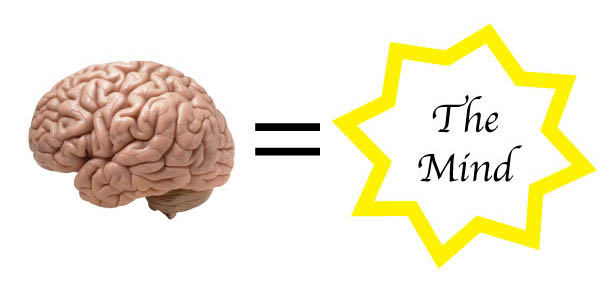
Let me phrase that in a different way, the result of the brain’s functions IS the mind!Brain-=-Mind

This may be controversial to some and at the neuroscientific level, is remarkably complex and not very intuitive. The brain vs mind topic will be a primary theme this blog will cover.

But let’s just assume for a moment that I’m correct and our thoughts and behaviors come from the biological functions of the brain. Then if something changes how the brain operates (like an illegal drug, for example), then it stands to reason our thoughts and behaviors would also be changed. If this change is harmful and results in negative behaviors or thoughts, you could think of the brain as suffering from a disease.

Let’s consider this in slightly more detail by thinking about disease more generally.

You may or may not have thought about this in this way, but the entire modern medical profession is based on a standard way of treating illness: the medical model of disease. The model is simple to understand: illness occurs because something (bacteria, virus, a genetic mutation, a poison, etc.) affects a particular organ, causing it to not work properly and resulting in the symptoms of the disease. Therefore, if you eliminate the cause of, or reverse, the damage to the organ,  you ameliorate the symptoms and cure the disease.

The figure below compares three different diseases in the context of the disease model: cystic fibrosis, hepatitis, and drug addiction.

Disease-Model

For cystic fibrosis, the cause of the disease is a genetic mutation that you inherit from your parents. The organ the mutation affects is the lung. The mutation causes the lungs to produce more mucous which makes breathing more difficult (the symptoms).

For hepatitis, a virus, the hepatitis virus, causes the disease. The virus specifically infects the liver (the affected organ), which it damages and causes a loss of appetite and malaise, can lead to yellow discoloration of the skin, or more severe liver damage (the symptoms).

For drug addiction, the cause of the disease is drug abuse. The drugs act on brain cells (neurons) which changes how they work. The change in brain function results in the drug-specific effects that you experience right away, while repeated use results in cravings, drug-seeking behavior, and even withdrawals (all of these are symptoms).

However, unlike the other diseases, the symptoms of cystic fibrosis or hepatitis do not feedback onto the organ to worsen the effects of the initial cause. But for drug addiction, this is exactly what happens. Drug addiction operates in a cycle in which the symptoms promote the cause (more on this in the future).

And one more significant caveat, not everyone that tries a drug will become an addict. This is just another layer of complexity that will be discussed in more detail later.

But so far, I haven’t discussed any concrete neuroscience. I’ve kept things very vague with phrases like “changes in brain function” but what changes am I talking about? Specifically, drugs change how brain cells, called neurons, talk to one another.

OK, that’s plenty for a little introduction…

Next Post

Introduction to Neuroscience: the Neuron.