In Defense of USAID, Part 1.
What six words best define America today? Years ago, Freakonomics held a contest to answer this, and while the winner—”Our Worst Critics Prefer to Stay”—was clever, my favorite remains: “The Most Gentle Empire So Far.” This phrase perfectly captures the contradictions at the heart of American foreign policy since the end of WWII. Our influence is vast, simultaneously dominating and self-serving yet aspirational towards an alleged greater good for all. The American Empire promotes democracy and free-market values—principles that have enriched the world. Yet, at their core, these ideals primarily serve America’s own wealth and power—a form of “friendly hegemony.”
The rising American tide has lifted many ships worldwide and the United States Agency for International Development (USAID) served an important role in buoying these efforts. USAID historically acted as a core lever of American “soft power” and aptly served the somewhat conflicting aims of greater good and direct U.S. benefit. The loss of the Agency (or near-loss) under Trump represents the most shocking shift in American Foreign Policy in decades and something far darker about how this President thinks about America’s status on the world stage. Trump cares only about American domination and wants to kill the myth of American goodness abroad.
This shift in foreign policy felt personal to me because of my own journey into the world of international development. After I earned my Ph.D. in Cellular and Molecular Biology, I became a bit burned out during my postdoctoral research so I sought a path to have greater benefit to more people’s lives. I pursued the AAAS Science and Technology Policy Fellowship and found myself quite unexpectedly at USAID. Before interviewing there, I knew almost nothing about the quietest giant in the world, or the work it did, the influence it had, and the good it spread. Throughout my fellowship, I became enamored with the noble mission of helping some of the poorest people in the world. I ended up staying for over 6 years through various contracting mechanisms and living in two different countries. I came to learn of the passion and intelligence of the people that worked there, the impact it had on people’s lives, and the economic value and security it brought to the U.S.
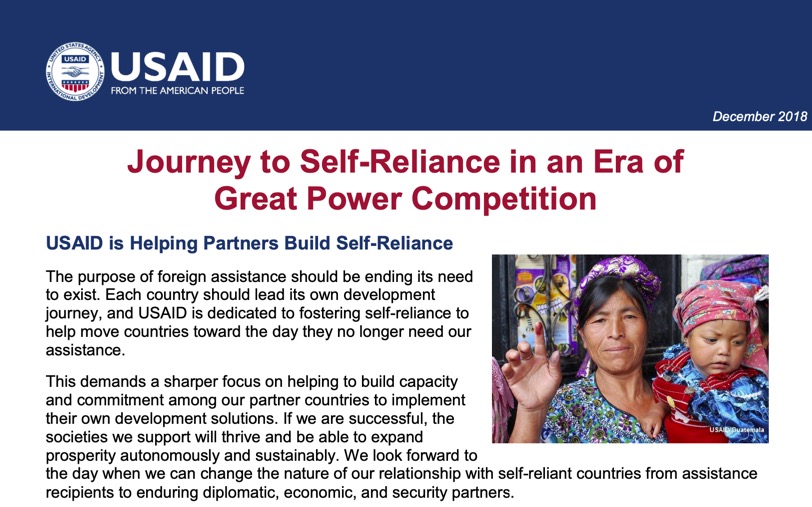
My time in Cambodia revealed how U.S. foreign aid serves both humanitarian goals and strategic interests—particularly in countering China’s influence. I worked directly with our incredible local Khmer staff and traveled all over the country to learn how the U.S. could partner with Cambodian businesses and alleviate the biggest challenges in the country. The not-so-secret goal of our work was to counter the influence of China in the country and throughout the region. In addition to its many humanitarian and economic benefits, U.S. foreign aid is ultimately a powerful tool for competing with and countering our adversaries WITHOUT the need for military force.
Over time, I became jaded. Like U.S. foreign policy itself, USAID operates in shades of gray—its noble mission often tangled in inefficiencies and contradictions. For all the good USAID did, it moved slowly, suffered from overly complex funding requirements, and had a heavy bias towards the “beltway bandits”—large contractors near Washington, D.C., that dominate federal spending. These inefficiencies reduced the potential impact of the billions of dollars it spent. There certainly is a lot of room to improve how money is spent and where. For example, I am an advocate of direct cash transfers, an area of work historically looked down upon in the foreign aid community. But despite these problems, the core thesis was always at the heart of the Agency’s work, something I experienced first hand: America can and should help other countries because it is good for them and it is good for us.
The purpose of improving efficiency and reducing waste is to make the work of something BETTER. In the case of USAID, a keen mind for reform could help the Agency to help MORE people and bring MORE value to the U.S. But that’s not what Elon Musk and his followers—more focused on spectacle than substance—care about. Attacking USAID has NOTHING to do with efficiency or cost savings and everything to do with making a statement: America doesn’t care about you anymore. If you want our help, you need to do something for us. It’s hard to keep friends if you view them solely as transactions. Ironically, this is exactly China’s model for aid. Indeed, no one is probably more thrilled at the death of USAID than China, which has been building its own vast foreign aid influence machine (which operates in a much more insidious manner than the U.S.’s version).
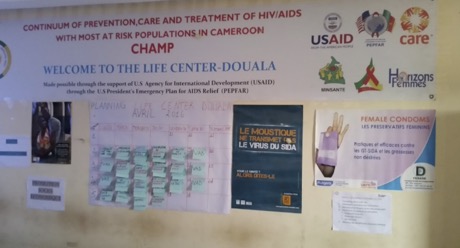
Even though USAID is and always has been intended as a foreign policy tool designed to advance U.S. interests, I believe it represents a much deeper value, a belief that American influence can make the world a better place. Whether or not U.S. influence actually has done real good in the world is a complicated issue with many facets. In some areas like global health, I argue this is an unambiguous “YES” (and I plan to explore the real benefits and evidence behind USAID in future articles).
Contradictory as it may be, there is power in the myth of American goodness in foreign policy. The world cannot be controlled through sheer force alone and America no longer has the strength or will to exert that type of control. American values of democracy and freedom ARE a strength inherent to themselves. The MYTH of what America represents is as important as what we actually are in reality. The death of this myth—of American goodness abroad—is what frightens me most. When America stops believing in its power to do good, the world loses more than a superpower; it loses hope. So what does the sacking of USAID say about us as a nation?
Trump and MAGA signal something deeper and far more sinister: that America no longer cares. Not about the world, not about the good we could do, and not about the responsibility that comes with our power. The tragic reality is that this President has abandoned even the pretense of striving for good. But America’s greatness has never been measured by power alone; it lies in the belief that we can lead through compassion and principle. In abandoning this belief, we forfeit not only our credibility but the very essence of American exceptionalism. Without the will to stand as a ‘city on the hill,’ we lose more than influence—we lose the soul of the nation.
 Dr. Simon Says Science (And More)