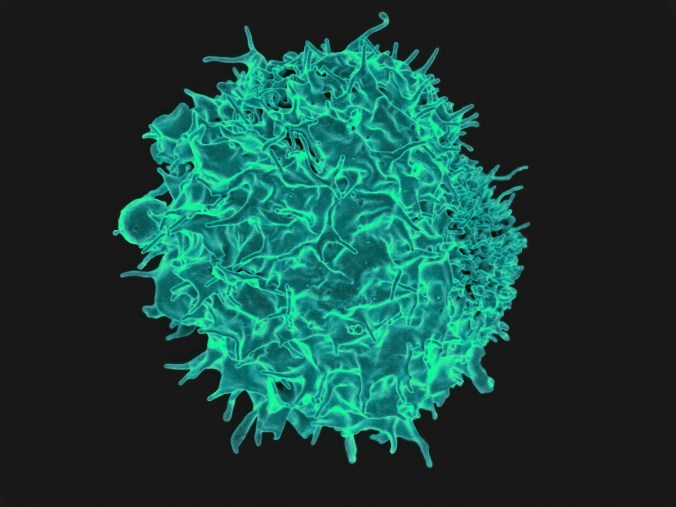
🧬 Patients with Autoimmunity Respond Better to CAR-T Therapy
Chimeric antigen receptor (CAR-T) cell therapy is a powerful immunotherapy in which autologous (self-derived) T-cells are reprogrammed to attack a patient’s cancer.
Seven CAR-T therapies are currently FDA-approved: three for B-cell lymphomas, one for acute lymphoblastic leukemia (B-ALL), one for mantle cell lymphoma, and two for multiple myeloma. However, side effects, sometimes potentially life-threatening, continue to pose a challenge.
Interestingly, a retrospective study of cancer patients receiving CAR-T therapy found that pre-existing autoimmune disease ((e.g., lupus, rheumatoid arthritis) was associated with less toxicity and shorter hospital stays. Among patients with myeloma, lymphoma, or leukemia, 68% of those with autoimmune disease experienced significant side effects, compared with 79% of patients without autoimmunity.The mean duration of hospitalization was also reduced by 2.1 days for patients with autoimmunity.
The specific mechanism that confers protection is still unknown, but this study confirms that CAR-T therapy is feasible and safe in patients with autoimmune disease and may even support exploration of new therapeutic avenues for this population.
💭 What do you think explains this protective effect?
🧠 Could immune dysregulation actually offer clues to safer, more effective immunotherapies?
🔗 Source: Associations Between Pre-Existing Autoimmunity and Chimeric Antigen Receptor T-Cell Therapy Toxicity for Cancer Treatment
ACR Open Rheumatology, 2025
https://acrjournals.onlinelibrary.wiley.com/doi/10.1002/acr2.70112
🤖 Thermo Fisher Partners with OpenAI to Advance Scientific Breakthroughs
Thermo Fisher Scientific, the Massachusetts-based global leader in analytical instruments, diagnostics, clinical solutions, and laboratory, pharmaceutical, and biotechnology services, has announced a partnership with OpenAI.
Thermo Fisher stated that the collaboration “will help improve the speed and success of drug development” and will be integrated across the company, including its clinical research and drug discovery divisions, among others.
This partnership is another example of how biomedicine is betting big on the promise of AI. For instance, last year Lilly and Novartis entered AI collaborations with Alphabet’s Isomorphic Labs. These initiatives may influence drug discovery, multi-omics analysis, precision medicine, clinical trial design, and more.
Time will tell whether the promise of AI will truly benefit patients, which is ultimately the goal of biopharma, but this new collaboration suggests that Thermo Fisher is betting it will.
💭 What areas of biomedical research do you think AI will impact the most?
🧠 How can biopharma companies leverage AI to improve their businesses?
🔗 Source: Press Release from Thermo Fisher https://newsroom.thermofisher.com/newsroom/press-releases/press-release-details/2025/Thermo-Fisher-Scientific-to-Accelerate-Life-Science-Breakthroughs-with-OpenAI/default.aspx
 Dr. Simon Says Science (And More)