The Loss of USAID is Killing People

In Defense of USAID, Part 2.

Since I wrote my last article, the indiscriminate gutting of USAID and the Federal government writ large has continued unabated and with reckless abandon for costs and consequences. I know many friends and former colleagues that have lost their jobs— people that are kind, intelligent, hard-working, and dedicated to the public good, not “corrupt” or “lazy” as Elon Musk would have you believe. But then again Mr. Musk doesn’t care about the fate of government workers or any of the good that USAID did because he believes “The fundamental weakness of Western civilization is empathy” as he said in an interview with Joe Rogan on Feb 28, 2025. Makes sense, because destroying USAID will literally kill people, and only someone devoid of empathy could possibly be ok with that.

The real cost to the death of USAID and American goodness abroad will be measured in bodies. This is not exaggeration or metaphor, I am being as literal as I can possibly be. Cutting USAID will kill people–IS killing people—and the most likely culprit is HIV/AIDS.

There are a million examples of foreign aid programs doing good things: nutrition and food programs to fight famines,  disaster recovery after a tsunami or earthquake, supporting refugee camps for those fleeing war, water and sanitation programs, programs combating gender-based violence, programs improving schools and hospitals, and so many more. I am going to focus on the biggest and probably the most successful foreign aid program in history – the President’s Emergency Fund for AIDS Relief or PEPFAR.

PEPFAR is a massive program that has saved 25 million lives from HIV over the last 20 years. While the program encompasses several agencies including the Department of State, the Centers for Disease Control and others, USAID is the primary implementer of the program. As one global health expert said, the loss of funding for program “will be a bloodbath.”
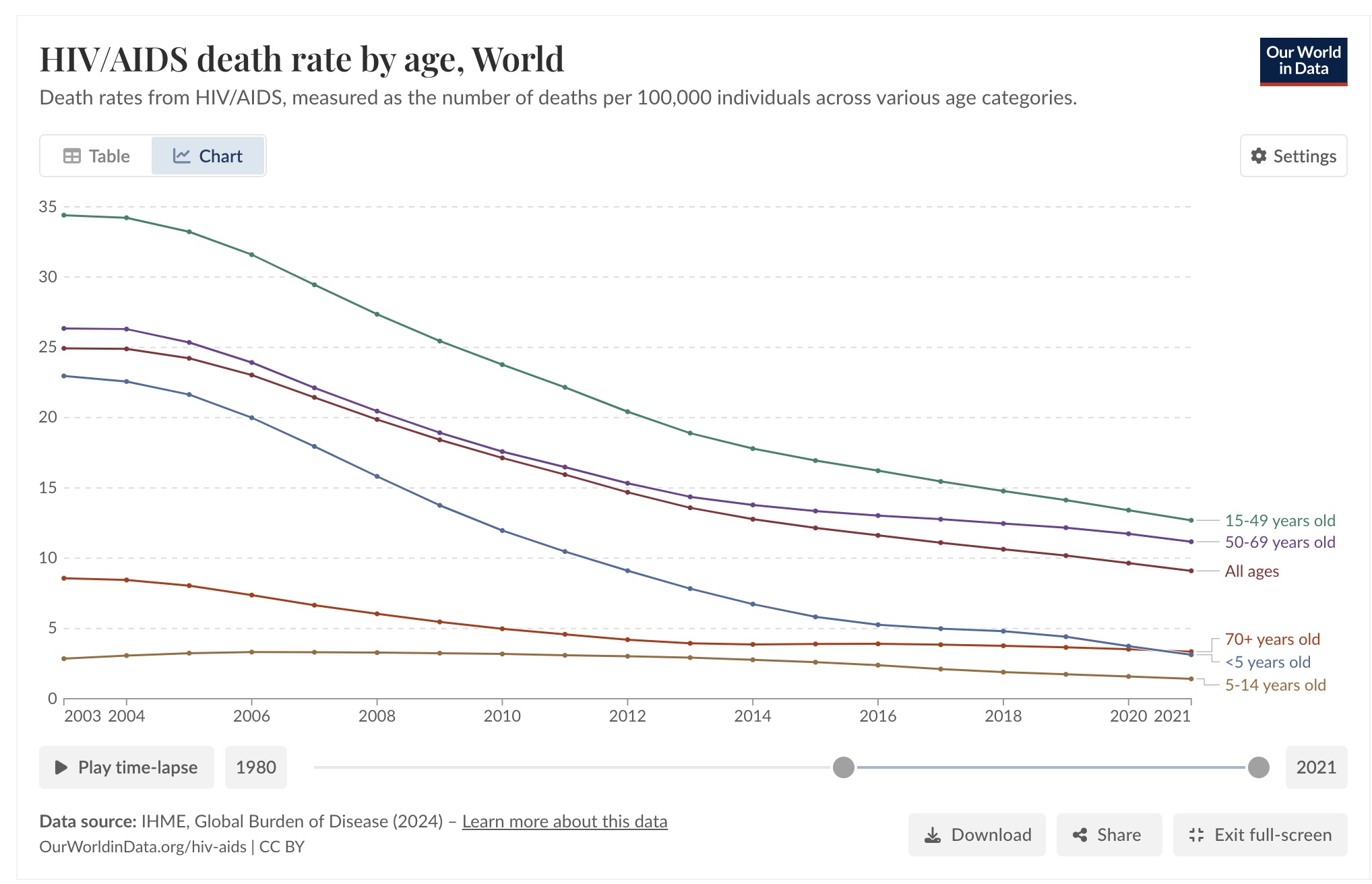
The number of HIV deaths have fallen since the start of PEPFAR in 2003.

PEPFAR was created in 2003 under the George W. Bush Administration. In the 90s and early 2000s, HIV was a true pandemic that rampaged across the globe. New antiviral treatments and public health campaigns combating the virus had huge benefits to fighting the disease in the U.S., but for lower income countries, the virus was left virtually unchecked, for example, killing tens of millions in Africa. As American lives and treasure were wasted in the middle-East wars fueled by post-9-11 hysteria, the Bush Administration at least recognized the benefits of foreign aid in promoting American values (this is a perfect example of the contradictions of U.S. foreign policy I alluded to in the last article). Bush signed the United States Leadership Against HIV/AIDS, Tuberculosis, and Malaria Act of 2003 on May 27, 2003, created PEPFAR (as well as programs for countering tuberculosis and malaria).
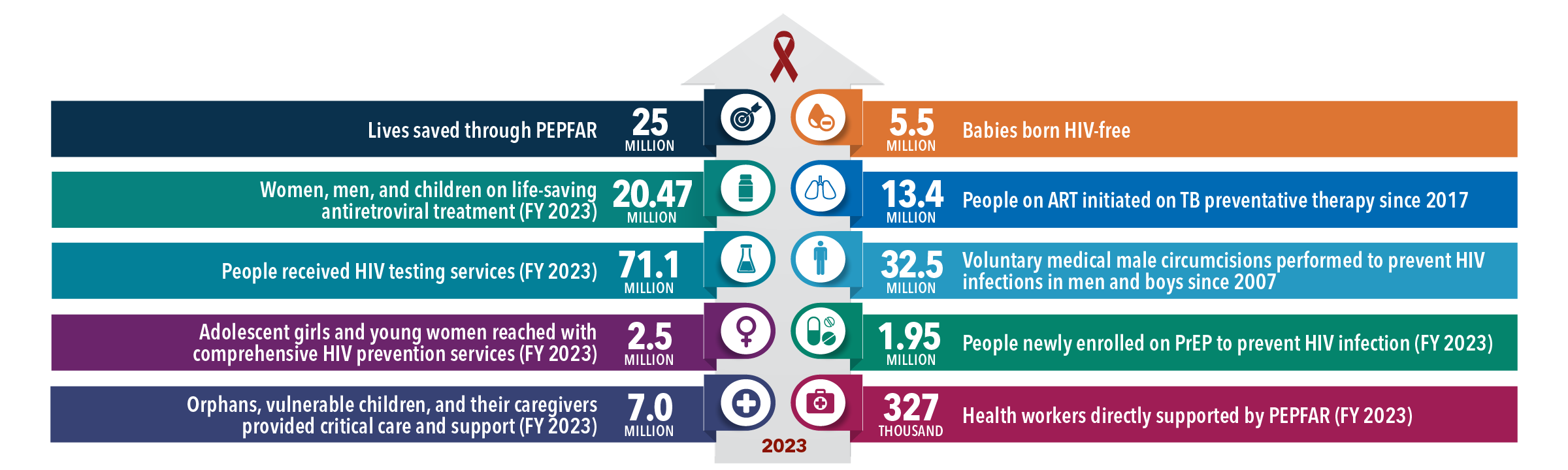
An Infographic from PEPFAR’s website summarizing its achievements.

PEPFAR has been an unambiguous success (and used to have wide-spread bipartisan support) and helped change the trajectory of the disease. There has  been a 39% decline in new HIV infections since 2010 and AIDS-related deaths have been reduced by 69% since the peak in 2004 and by 51% since 2010. The drop in HIV infections in Africa has largely been credited to USAID‘s stewardship of the program. Indeed, countries that have received PEPFAR aid have lower mortality rates compared to non-PEPFAR countries, providing strong evidence that the program DOES work.
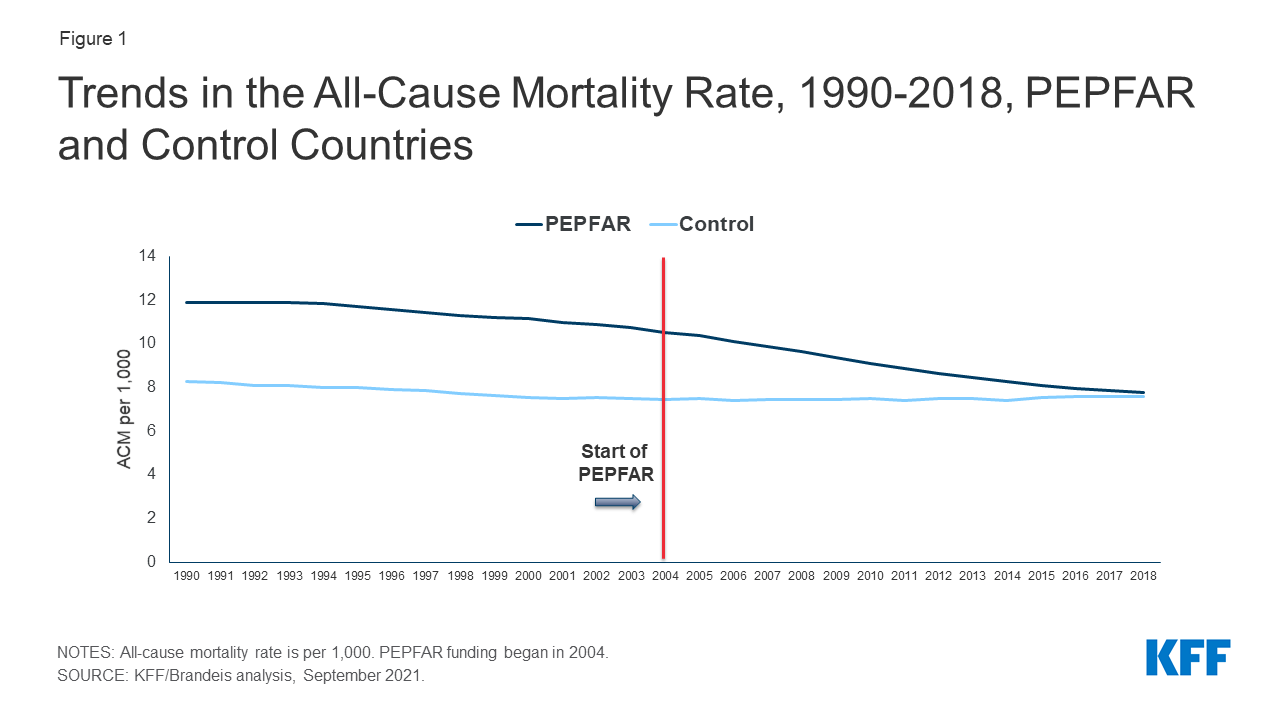
Mortality has fallen in countries receiving PEPFAR aid since the start of the program in 2003.

For the cynics out there, what do we get out of it? Besides that obvious, that PEPFAR’s efforts have led to a significant reduction in new HIV infections globally, decreasing the likelihood of the virus spreading and worsening the situation in the United States, many economic benefits have been documented. For example, PEPFAR funding has been associated with increased employment, particularly among males in sub-Saharan African countries, contributing to economic growth and stability. Further, healthier populations in Africa have led to more robust economies, creating new markets for U.S. exports and fostering economic partnerships. But I don’t want to spend draw out this line of thinking because personally, I think saving 25 million lives is justification enough for the program. I wonder if Mr. Musk would agree.

The USAID stop work order and dismantling of the agency have already caused disruptions and threaten to undo the decade of progress in fighting the forgotten pandemic. In 2024, more than 20 million people were receiving HIV treatment through PEPFAR and nearly 84 million tested for HIV. Many countries, especially in Africa, lack the funding to cover HIV treatments and testing, hence why the generosity of the US and other nations is so important. The sudden cessation of funding has had an immediate impact as HIV testing and treatment centers are already closing and patients are no longer receiving their life-saving medications. One estimate says as many as 1,650,000 people could die within a year without American foreign aid for H.I.V. prevention and treatment.
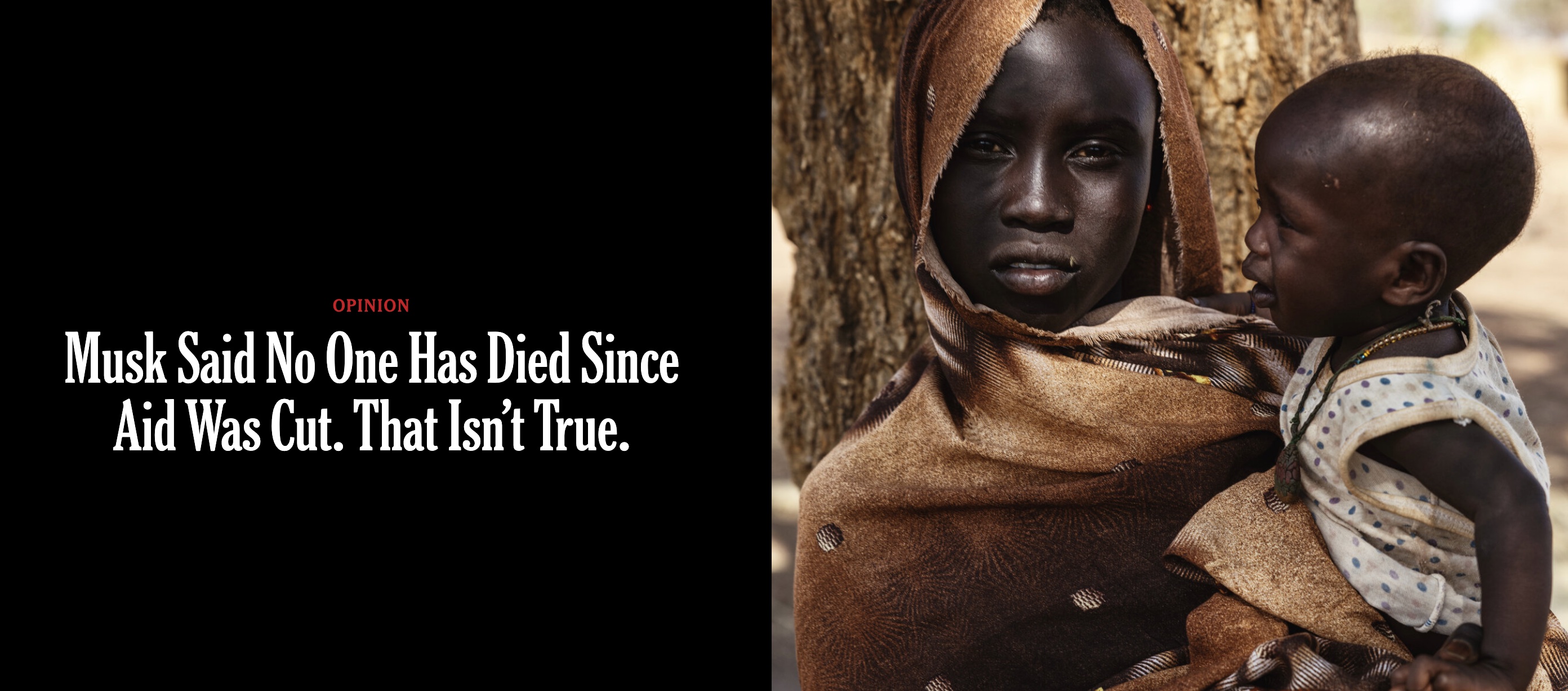
Published in the New York Times (March 15, 2025)

Mr. Musk claimed that not a single life has been lost. The New York Times posted an analysis of how wrong this is. The article opens with the story of 10-year old Peter Donde who had died since he was unable to get his HIV medications. I’ll quote part of the article here: 

Peter Donde was a 10-year-old infected with H.I.V. from his mother during childbirth. But American aid kept Peter strong even as his parents died from AIDS. A program started by President George W. Bush called PEPFAR saved 26 million lives from AIDS, and one was Peter’s.

Under PEPFAR, an outreach health worker ensured that Peter and other AIDS orphans got their medicines. Then in January, Trump and Musk effectively shuttered the U.S. Agency for International Development, perhaps illegally, and that PEPFAR outreach program ended. Orphans were on their own.

Without the help of the community health worker, Peter was unable to get his medicines, so he became sick and died in late February, according to Moses Okeny Labani, a health outreach worker who helped manage care for Peter and 144 other vulnerable children.

The immediate cause of death was an opportunistic pneumonia infection as Peter’s viral load increased and his immunity diminished, said Labani.

“If U.S.A.I.D. would be here, Peter Donde would not have died,” Labani said.

This is just one life tragically and unnecessarily lost because of Mr. Musk and Mr. Trump’s actions. The true impact on human life may not be known for many years but there will be many, many more stories like Peter’s. Ironically, the loss of funding will hit Musk’s home country of South Africa particularly hard. One HIV expert said “I predict a huge disaster” in regards to the rise of infections and deaths there. Global Health used to be an issue of bi-partisan support. What congressman doesn’t love to brag about saving lives? But now Mr. Trump’s stronghold has forced his party to abandon their values, if they had any to begin with.

Mr. Musk, you killed Peter Donde. How many more will die because of your actions?
The Death of American Goodness Abroad

In Defense of USAID, Part 1.

What six words best define America today? Years ago, Freakonomics held a contest to answer this, and while the winner—”Our Worst Critics Prefer to Stay”—was clever, my favorite remains: “The Most Gentle Empire So Far.” This phrase perfectly captures the contradictions at the heart of American foreign policy since the end of WWII. Our influence is vast, simultaneously dominating and self-serving yet aspirational towards an alleged greater good for all. The American Empire promotes democracy and free-market values—principles that have enriched the world. Yet, at their core, these ideals primarily serve America’s own wealth and power—a form of “friendly hegemony.”

The rising American tide has lifted many ships worldwide and the United States Agency for International Development (USAID) served an important role in buoying these efforts. USAID historically acted as a core lever of American “soft power” and aptly served the somewhat conflicting aims of greater good and direct U.S. benefit. The loss of the Agency (or near-loss) under Trump represents the most shocking shift in American Foreign Policy in decades and something far darker about how this President thinks about America’s status on the world stage. Trump cares only about American domination and wants to kill the myth of American goodness abroad. 

The official USAID logo.

This shift in foreign policy felt personal to me because of my own journey into the world of international development. After I earned my Ph.D. in Cellular and Molecular Biology, I became a bit burned out during my postdoctoral research so I sought a path to have greater benefit to more people’s lives. I pursued the AAAS Science and Technology Policy Fellowship and found myself quite unexpectedly at USAID. Before interviewing there, I knew almost nothing about the quietest giant in the world, or the work it did, the influence it had, and the good it spread. Throughout my fellowship, I became enamored with the noble mission of helping some of the poorest people in the world. I ended up staying for over 6 years through various contracting mechanisms and living in two different countries. I came to learn of the passion and intelligence of the people that worked there, the impact it had on people’s lives, and the economic value and security it brought to the U.S.

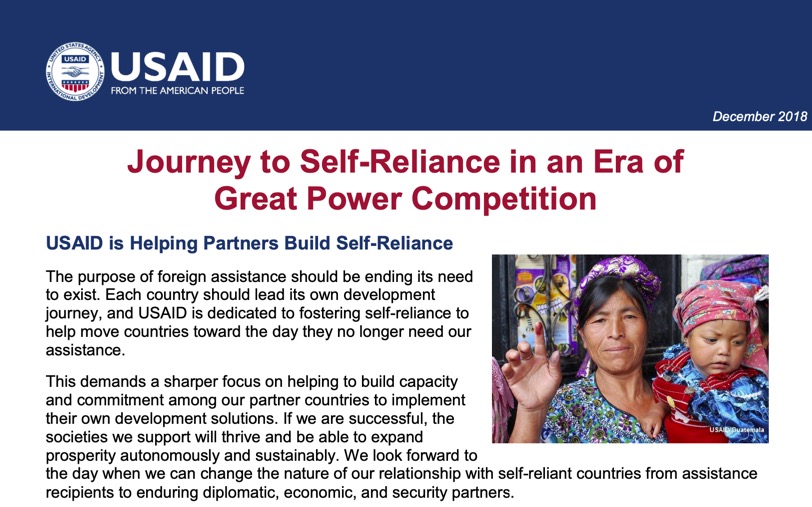
An excerpt from an actual policy brief from Trump 1.0 and how the Administration formally viewed USAID as a tool to counter China.

My time in Cambodia revealed how U.S. foreign aid serves both humanitarian goals and strategic interests—particularly in countering China’s influence. I worked directly with our incredible local Khmer staff and traveled all over the country to learn how the U.S. could partner with Cambodian businesses and alleviate the biggest challenges in the country. The not-so-secret goal of our work was to counter the influence of China in the country and throughout the region. In addition to its many humanitarian and economic benefits, U.S. foreign aid is ultimately a powerful tool for competing with and countering our adversaries WITHOUT the need for military force.  

Over time, I became jaded. Like U.S. foreign policy itself, USAID operates in shades of gray—its noble mission often tangled in inefficiencies and contradictions. For all the good USAID did, it moved slowly, suffered from overly complex funding requirements, and had a heavy bias towards the “beltway bandits”—large contractors near Washington, D.C., that dominate federal spending. These inefficiencies reduced the potential impact of the billions of dollars it spent. There certainly is a lot of room to improve how money is spent and where. For example, I am an advocate of direct cash transfers, an area of work historically looked down upon in the foreign aid community. But despite these problems, the core thesis was always at the heart of the Agency’s work, something I experienced first hand: America can and should help other countries because it is good for them and it is good for us.

The purpose of improving efficiency and reducing waste is to make the work of something BETTER. In the case of USAID, a keen mind for reform could help the Agency to help MORE people and bring MORE value to the U.S. But that’s not what Elon Musk and his followers—more focused on spectacle than substance—care about. Attacking USAID has NOTHING to do with efficiency or cost savings and everything to do with making a statement: America doesn’t care about you anymore. If you want our help, you need to do something for us. It’s hard to keep friends if you view them solely as transactions. Ironically, this is exactly China’s model for aid. Indeed, no one is probably more thrilled at the death of USAID than China, which has been building its own vast foreign aid influence machine (which operates in a much more insidious manner than the U.S.’s version).

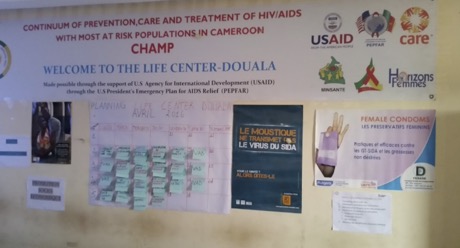
An example of a USAID program supporting a HIV treatment clinic in Cameroon.

Even though USAID is and always has been intended as a foreign policy tool designed to advance U.S. interests, I believe it represents a much deeper value, a belief that American influence can make the world a better place. Whether or not U.S. influence actually has done real good in the world is a complicated issue with many facets. In some areas like global health, I argue this is an unambiguous “YES” (and I plan to explore the real benefits and evidence behind USAID in future articles). 

Contradictory as it may be, there is power in the myth of American goodness in foreign policy. The world cannot be controlled through sheer force alone and America no longer has the strength or will to exert that type of control. American values of democracy and freedom ARE a strength inherent to themselves. The MYTH of what America represents is as important as what we actually are in reality. The death of this myth—of American goodness abroad—is what frightens me most. When America stops believing in its power to do good, the world loses more than a superpower; it loses hope. So what does the sacking of USAID say about us as a nation? 

Trump and MAGA signal something deeper and far more sinister: that America no longer cares. Not about the world, not about the good we could do, and not about the responsibility that comes with our power. The tragic reality is that this President has abandoned even the pretense of striving for good. But America’s greatness has never been measured by power alone; it lies in the belief that we can lead through compassion and principle. In abandoning this belief, we forfeit not only our credibility but the very essence of American exceptionalism. Without the will to stand as a ‘city on the hill,’ we lose more than influence—we lose the soul of the nation.

Trump and Musk Attack Biomedical Research

While the country enjoyed its annual celebration of the Super Bowl, the U.S. biomedical research sector was stabbed in the back.

Late last week, Trump slashed billions in funding overnight with no planning or consultations with researchers, doctors, or hospitals. The impact will be catastrophic for biomedical research: labs will shut down, clinical trials could get cancelled, and hospital staff fired.

What did they actually do?

The Trump Administration announced they would cap the amount of overhead that the National Institutes of Health (NIH), the largest funder of biomedical research in the world, is allowed to issue in research grants at 15%. Historically, the NIH has paid up to the ~50% range. If it goes through, this change would amount to a near immediate loss of billions of dollars to hospitals and universities, many in red states that voted for Trump.

So what do overhead costs cover? It’s estimated that for every dollar spent on planning and conducting  research, another is needed for facility and support staff costs.  Meaning, overhead pays for literally everything necessary for a lab to actually DO the research. This includes:

  • Buildings  costs
  • Advanced equipment & infrastructure
  • Utility costs
  • Health insurance & benefits

NIH funding also supports about 412,000 jobs, from research assistants to grant managers to people who dispose of toxic chemicals.

All of this is labeled by Musk and his goons as unnecessary waste as they continue their ill conceived rampage against the federal government and a strong American future.

The message is clear and destabilizing to the scientific ecosystem:  Your work is not valued. Your job is expendable. Patients don’t need new treatments.

Now is the time to inform and act — because the average person will not feel the near-term impact. But when the pipeline for new discoveries and new life-saving medications dries up, and America loses its position as the leader in biomedical innovation — we’ll ask “How did we let this happen??” 

The NIH is the engine that powers US medical innovation: long-term research with decades long horizons that companies and investors will never fund. Our economy gets a solid payback on this research — measurable in dollars, and immeasurable in lives.

For every $1 spent on NIH research, $2.46 flows back into our economy (Link1, Link2). Not to mention the taxes paid by a $1 Trillion biopharma and medical research industry. 

The discoveries made in these labs become tomorrow’s life-saving treatments. With healthcare costs spiraling, it is pennywise, pound foolish to slash research. 

Examples originating from the NIH: 

  • Cardiovascular disease: Advances in hypertension and cholesterol management reduced heart attack and stroke rates, saving $100s of billions. 
  • Cancer: research in precision medicine and immunotherapy has led to higher survival rates. Without foundational NIH funding, cancer immunotherapies wouldn’t exist.  
  • So many more!

Musk dares to call long-term investments in the fight against cancer a WASTE?

NIH’s indirect costs average (28%) and are in-line with private biotechs (25%-50%) and defense contractor overhead (10-100%) —  spending on facilities, equipment, infrastructure, benefits, project management, administration, etc.

Should we have oversight to ensure appropriate spending? Of course. But Musk’s surprise nuclear bomb is the WRONG way to approach this!

The NIH budget is:  

US long-term innovation is fueled by grants, and is the basis for our future economy (e.g. Internet, human genome, etc). The US has been the world’s beacon for medical research, attracting top talent and driving innovation. We’re about to dim that light. China just surpassed the US in annual research publicationsin the race for global dominance in medical research, these NIH cuts are like shooting researchers in the leg.

What do you value? For me, health research that saves lives ranks near the top. Do you agree? Speak. Up. Now. Lives depend on it.